
Overview
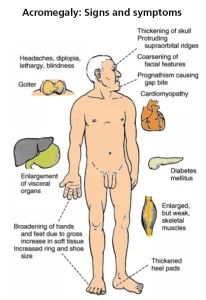
Acromegaly is a rare hormonal disorder that occurs in adults when the body produces too much growth hormone. This excess hormone causes certain bones, organs, and soft tissues to grow larger than normal. The condition is driven by the pituitary gland, a small gland located at the base of the brain, which releases growth hormone into the bloodstream. High levels of growth hormone lead to increased production of insulin-like growth factor-1, or IGF-1, which is responsible for abnormal growth.
In most cases, acromegaly is caused by a noncancerous pituitary tumor called an adenoma. Because adult bones have already stopped growing in length, acromegaly does not increase height. Instead, it causes enlargement of the hands, feet, face, and other tissues. These physical changes develop very slowly over many years, which often delays diagnosis.
Acromegaly is uncommon, affecting fewer than 15 people per 100,000. Each year, only a small number of new cases are diagnosed. Without treatment, the condition can lead to serious health problems and reduced life expectancy. With appropriate treatment, however, hormone levels can often be controlled, symptoms can improve, and many people can live a near-normal lifespan.
Symptoms
Symptoms of acromegaly develop gradually and vary widely from person to person. Many people do not notice changes right away, as they often occur over several years. Visible changes are often the first signs, but not everyone experiences all symptoms.
Common physical changes include:
-
Enlarged hands and feet, often noticed as an increase in ring or shoe size
-
Thickened lips, ears, or nose
-
A protruding jaw or brow
-
Gaps forming between teeth
-
An enlarged tongue
-
Widening of the rib cage, giving the chest a rounder appearance
Skin-related symptoms may include oily or thickened skin, acne, skin tags, and swelling beneath the skin. Excess growth hormone also affects many organs and body systems. Additional symptoms can include vision problems, increased sweating and body odor, headaches, fatigue, joint pain, and sleep disturbances such as sleep apnea.
Hormonal imbalance may also affect sexual and reproductive health. Some people experience voice deepening due to thickened vocal cords, changes in speech, or loud snoring. Because symptoms progress slowly, they are often mistaken for normal aging.
Causes
The most common cause of acromegaly is a benign pituitary adenoma that produces excessive growth hormone over a long period of time. As growth hormone levels rise, the liver produces increased amounts of IGF-1, which leads to abnormal growth of bones and tissues.
Less commonly, acromegaly is caused by tumors outside the pituitary gland, such as tumors in the lungs or pancreas. These tumors may produce growth hormone directly or release growth hormone–releasing hormone, which stimulates the pituitary gland to make more growth hormone.
Pituitary adenomas arise from specific hormone-producing cells called somatotroph cells. Only tumors that develop from these cells cause acromegaly. Other pituitary tumors may affect different hormones but do not lead to excess growth hormone production.
Risk factors
Most people with acromegaly do not have an identifiable risk factor. However, certain rare inherited conditions increase the likelihood of developing the disorder.
Known risk factors include:
-
Multiple endocrine neoplasia type 1, a genetic condition that causes hormone-secreting tumors in multiple glands
-
Familial isolated pituitary adenoma, a rare inherited disorder associated with pituitary tumors
Outside of these genetic conditions, acromegaly usually occurs sporadically, with no family history or clear trigger.
Complications
If acromegaly is not treated, prolonged exposure to high levels of growth hormone and IGF-1 can lead to serious and sometimes life-threatening complications.
Cardiovascular complications are common and include:
-
High blood pressure
-
Narrowing of the arteries, increasing the risk of heart attack or stroke
-
Thickened or enlarged heart muscle, which can progress to heart failure
Other complications may include:
-
Type 2 diabetes and insulin resistance
-
High cholesterol and abnormal blood fat levels
-
Osteoarthritis, joint stiffness, and chronic pain
-
Carpal tunnel syndrome with numbness or tingling in the hands
-
Spinal compression or fractures
-
Sleep apnea and breathing problems during sleep
-
Thyroid enlargement
-
Vision loss if the pituitary tumor presses on the optic nerves
Acromegaly is also linked to a higher risk of certain cancers, particularly colon cancer, due to the development of colon polyps. Reproductive and sexual health problems, infertility, depression, fatigue, and reduced quality of life are also possible.
Early diagnosis and treatment can significantly reduce the risk of these complications and prevent further progression of the disease.
Advertisement
