Overview
Symptoms
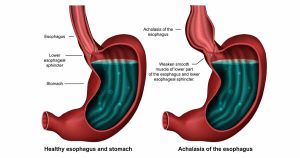
Achalasia symptoms usually develop slowly and tend to worsen over time as the esophagus becomes less able to move food and liquid into the stomach. Early symptoms may be mild and easy to overlook, but they often become more persistent.
Common symptoms of achalasia include:
-
Difficulty swallowing, known as dysphagia, which may feel like food or liquids are stuck in the throat or chest
-
Regurgitation of swallowed food or saliva back into the throat or mouth
-
Heartburn-like discomfort
-
Frequent belching
-
Chest pain that may come and go
-
Coughing during the night
-
Lung infections, such as pneumonia, caused by food entering the lungs
-
Unintentional weight loss
-
Vomiting, especially after eating
Because symptoms progress gradually, achalasia is sometimes mistaken for gastroesophageal reflux disease. However, in achalasia, the regurgitated material comes from the esophagus rather than the stomach.
Causes
The exact cause of achalasia is not fully understood. Experts believe the condition develops when the nerves that control the muscles of the esophagus become damaged or are lost. When these nerves stop working properly, the esophageal muscles cannot move food efficiently into the stomach.
Several possible factors may contribute to nerve damage in achalasia, including viral infections or abnormal immune system responses that mistakenly attack healthy nerve cells. In these cases, the body’s defense system may play a role in triggering the condition.
In rare situations, achalasia may be linked to inherited genetic disorders or certain infections. Although the underlying cause often remains unclear, the result is impaired muscle function in the esophagus that cannot be reversed once nerve damage has occurred. Treatment focuses on relieving symptoms and improving swallowing rather than curing the condition.
Advertisement