
Overview
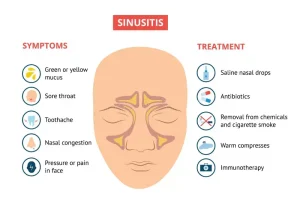
Acute sinusitis occurs when the spaces inside the nose, called sinuses, become inflamed and swollen. This inflammation makes it difficult for mucus to drain properly, leading to mucus buildup inside the sinuses.
Because of this blockage, breathing through the nose can become difficult. Swelling and pressure may be felt around the eyes, cheeks, nose, or forehead. Some people experience throbbing facial pain or headaches.
The most common cause of acute sinusitis is the common cold. In many cases, symptoms improve within 7 to 10 days without specific treatment. Home remedies are often enough to manage symptoms. If sinusitis lasts longer than 12 weeks despite treatment, it is known as chronic sinusitis.
Symptoms
Acute sinusitis symptoms often develop suddenly and may include:
-
Thick yellow or green mucus from the nose or draining down the back of the throat
-
Stuffy or blocked nose that makes breathing difficult
-
Pain, tenderness, swelling, or pressure around the eyes, cheeks, nose, or forehead, often worse when bending forward
Other symptoms that may occur include:
-
Ear pressure
-
Headache
-
Tooth pain
-
Reduced or changed sense of smell
-
Cough
-
Bad breath
-
Tiredness
-
Fever
Causes
Acute sinusitis is most commonly caused by a viral infection. The common cold is the usual trigger. Viral infections cause swelling of the nasal passages, which blocks normal sinus drainage.
In some cases, when the sinuses remain blocked for a period of time, a bacterial infection may develop. This can make symptoms more severe or cause them to last longer than expected.
Risk factors
Certain conditions and exposures can increase the risk of developing acute sinusitis:
-
Hay fever or other allergies that affect the nasal passages
-
A recent cold that involves the sinuses
-
Structural problems inside the nose, such as a deviated nasal septum, nasal polyps, or tumors
-
Medical conditions like cystic fibrosis or immune system disorders
-
Exposure to cigarette smoke, including secondhand smoke
Complications
Acute sinusitis rarely causes complications, but they can occur in some cases:
-
Chronic sinusitis, where symptoms last longer than 12 weeks
-
Meningitis, an infection of the membranes and fluid surrounding the brain and spinal cord
-
Spread of infection to nearby bones or skin
-
Vision problems if the infection spreads to the eye socket, which can lead to reduced vision or blindness
Prevention
You can lower the risk of acute sinusitis by taking steps to protect your nasal passages and overall health:
-
Avoid close contact with people who have colds or other respiratory infections
-
Wash hands frequently with soap and water
-
Manage allergies with the help of a healthcare provider
-
Stay away from cigarette smoke and polluted air
-
Use a humidifier if indoor air is dry, making sure it is cleaned regularly to prevent mold buildup
Advertisement
