
Overview
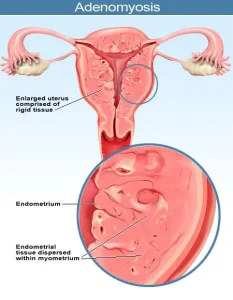
Adenomyosis is a condition that affects the uterus, the hollow, pear-shaped organ where a baby grows during pregnancy. In adenomyosis, tissue that normally lines the inside of the uterus grows into the muscle wall of the uterus. This lining tissue is called endometrial tissue.
During each menstrual cycle, endometrial tissue thickens, breaks down and bleeds. When this tissue is present within the uterine muscle wall, it follows the same cycle. This process can cause the uterus to enlarge and may lead to painful, heavy menstrual periods.
The exact cause of adenomyosis is not well understood. Symptoms often improve or go away after menopause. Treatments focus on managing pain and heavy bleeding, usually with hormone-based therapies. Surgery to remove the uterus, known as hysterectomy, is the only known cure.
Symptoms
Some people with adenomyosis have no noticeable symptoms or only mild discomfort. Others may experience symptoms that interfere with daily life, including:
-
Heavy or prolonged menstrual periods
-
Severe cramping or sharp pelvic pain during periods
-
Ongoing pelvic pain outside of menstruation
-
Pain during sexual intercourse
-
An enlarged uterus, which may cause pressure or tenderness in the lower abdomen
When to see a doctor
You should see a healthcare professional if you have menstrual periods that are very heavy, last a long time, or cause severe pain that affects your daily activities.
Causes
The exact cause of adenomyosis is unknown. Several theories have been suggested to explain how it develops, including:
-
Endometrial cells growing into the uterine muscle, possibly through surgical incisions made during procedures such as cesarean delivery
-
Endometrial tissue forming within the uterus during fetal development
-
Inflammation of the uterine lining after childbirth
-
Stem cells from bone marrow in the uterine muscle transforming into endometrial-like cells
-
Retrograde menstruation, in which menstrual blood flows backward into the pelvic cavity instead of leaving the body
Regardless of how adenomyosis begins, its growth appears to depend on estrogen, the female reproductive hormone.
Risk factors
Certain factors may increase the likelihood of developing adenomyosis:
-
Previous uterine surgery, such as cesarean section, fibroid removal, or dilation and curettage
-
Having given birth
-
Being in middle age
Most cases are diagnosed in women in their 40s and 50s, possibly due to longer lifetime exposure to estrogen. However, newer research suggests adenomyosis may also be common in younger women.
Adenomyosis often occurs alongside other uterine conditions, such as endometriosis and uterine fibroids. When multiple conditions are present, diagnosis can be more challenging because symptoms overlap.
Complications
Heavy menstrual bleeding caused by adenomyosis can lead to anemia. Anemia occurs when there are not enough healthy red blood cells to carry oxygen throughout the body. This may result in fatigue, shortness of breath, and other health concerns.
Chronic pain and heavy bleeding can significantly affect quality of life. Some people may avoid social activities, exercise, or travel due to pain or fear of bleeding through clothing.
Adenomyosis has also been linked to pregnancy complications, including miscarriage, preterm birth, and babies who are small for their gestational age. It may also be associated with infertility, although more research is needed to fully understand this connection.
Prevention
There is no known way to prevent adenomyosis. However, early evaluation of heavy or painful periods may help with timely diagnosis and symptom management. Working with a healthcare professional to manage hormone levels and treat related uterine conditions may help reduce symptom severity and improve quality of life.
Advertisement
