
Overview
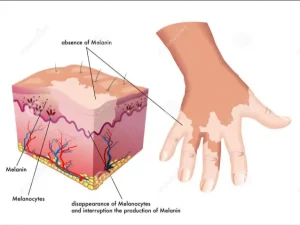
Albinism most often refers to oculocutaneous albinism, or OCA. OCA is a group of inherited conditions in which the body produces little or no melanin. Melanin is the natural pigment that gives color to the skin, hair, and eyes. It also plays an important role in the normal development and functioning of the eyes. Because of this, people with albinism commonly have vision-related problems in addition to changes in pigmentation.
The appearance of albinism can vary widely. Some individuals have very light skin, hair, and eye color, while others may have coloring closer to that of their family members. Sensitivity to sunlight is common, which increases the risk of sun-related skin damage and skin cancer.
Although albinism has no cure, proper eye care, regular skin monitoring, and sun protection allow many people with the condition to lead healthy and active lives.
Symptoms
Symptoms of albinism mainly affect skin, hair, eyes, and vision. The severity and combination of symptoms can differ from person to person.
Skin color is often lighter than that of close family members, though it can range from very white to light brown. In some individuals, pigmentation may be similar to that of relatives without albinism. With sun exposure, the skin may develop freckles, moles that may be pink or light in color, large freckle-like spots known as solar lentigines, and sunburn without the ability to tan. In some cases, skin color remains unchanged throughout life, while in others, pigmentation may increase slightly during childhood or adolescence.
Hair color can range from white to brown. People of African or Asian descent may have yellow, red, or light brown hair. Hair color may darken somewhat with age or appear darker due to exposure to minerals in water or environmental factors.
Eye-related symptoms include very light blue to brown eye color, which may change over time. Eyelashes and eyebrows are often pale. Because the irises lack sufficient pigment, light can pass through them, causing extreme sensitivity to bright light. In certain lighting conditions, the eyes may appear red.
Vision problems are a key feature of all forms of albinism and may include:
-
Involuntary, rapid eye movements known as nystagmus
-
Head tilting or unusual head posture to improve vision
-
Eyes that do not align properly, a condition called strabismus
-
Difficulty seeing near or far objects
-
Extreme sensitivity to light
-
Blurred vision caused by astigmatism
-
Reduced vision due to differences in retinal development
-
Abnormal routing of optic nerve signals to the brain
-
Poor depth perception
-
Legal blindness or, in rare cases, complete blindness
Causes
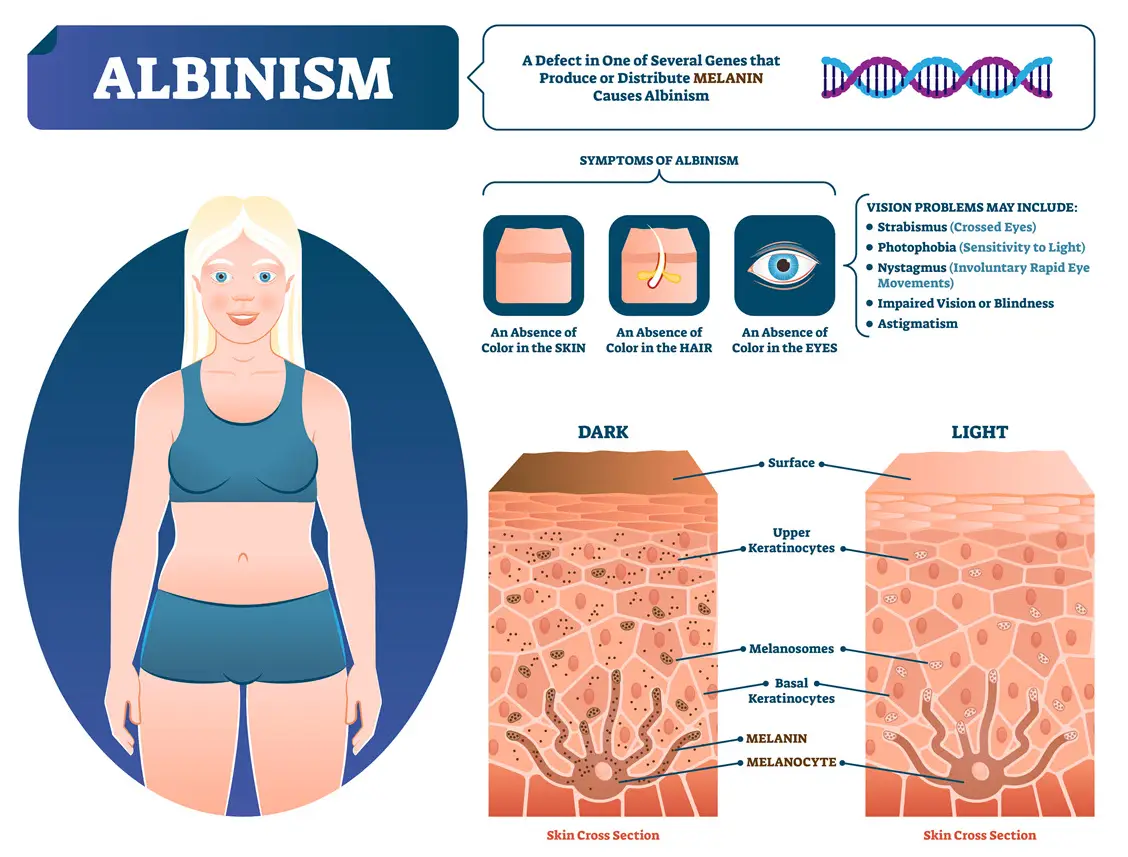
Albinism is caused by changes in genes that provide instructions for making proteins involved in melanin production. Melanin is produced by specialized cells called melanocytes, which are found in the skin, hair, and eyes.
Different gene changes lead to different types of albinism. These changes may result in a complete lack of melanin or a significant reduction in its production. The specific gene affected determines the type of albinism and the severity of pigmentation and vision problems.
Oculocutaneous albinism is the most common form and is inherited in an autosomal recessive pattern, meaning a person inherits one altered gene from each parent. Several subtypes exist, labeled OCA1 through OCA8, each associated with different genes and varying levels of pigmentation.
Ocular albinism mainly affects the eyes and vision, with minimal or no skin and hair involvement. The most common type is inherited through an X-linked recessive pattern and usually affects males.
In rare cases, albinism occurs as part of inherited syndromes. These may include additional health problems such as bleeding disorders, immune system issues, lung or bowel disease, and neurological complications.
Risk factors
Risk factors for albinism depend on family history and the inheritance pattern involved. Having one or both parents who carry a gene change linked to albinism increases the likelihood of the condition occurring in a child. The specific risk varies based on the type of albinism and whether the gene is inherited in an autosomal or X-linked pattern.
Complications
Albinism can lead to both physical and emotional complications.
Eye-related complications may affect learning, employment opportunities, and the ability to drive. Reduced vision can require special educational support and visual aids.
Skin-related complications are primarily linked to sun sensitivity. People with albinism are at high risk of sunburn, which can lead to long-term skin damage such as thickened or rough skin. Repeated sun exposure also significantly increases the risk of skin cancer.
Melanoma in people with albinism may appear pink or red rather than dark, making early detection more difficult. Without regular skin checks, skin cancer may be diagnosed at a later stage.
Social and emotional challenges are also common. Individuals with albinism may experience discrimination, bullying, or unwanted attention because of their appearance or visual aids. Feeling different from family members or cultural groups can contribute to social isolation, stress, and low self-esteem. Using respectful language, such as person with albinism, helps reduce stigma and negative perceptions.
Prevention
Albinism cannot be prevented, but genetic counseling can help families understand the condition. If a family member has albinism, a genetic counselor can explain the inheritance pattern, the chances of having another child with albinism, and the role of genetic testing. Early awareness allows families to plan appropriate medical care, eye evaluations, and skin protection strategies.
Advertisement
