
Overview
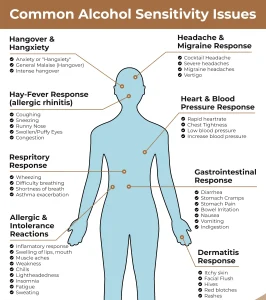
Alcohol intolerance is an inherited condition in which the body is unable to properly break down alcohol. This happens because the body lacks certain enzymes needed to process alcohol efficiently. As a result, drinking alcohol can trigger uncomfortable and sometimes immediate reactions. The most common signs include facial flushing and a stuffy or runny nose. The most effective way to avoid these reactions is to avoid drinking alcohol altogether.
Many people notice unpleasant reactions after consuming specific alcoholic drinks and may believe they have alcohol intolerance. However, these reactions are often caused by other factors and are not the same as true alcohol intolerance.
Alcohol intolerance is different from an alcohol allergy. A true allergy to alcohol itself is rare. More often, symptoms occur due to sensitivity or allergy to ingredients found in alcoholic beverages, such as sulfites, grains, or preservatives. In some cases, alcohol may also interact with certain medications and lead to adverse reactions.
Symptoms
Symptoms of alcohol intolerance or alcohol-related reactions can appear shortly after drinking and may vary in severity. Common symptoms include:
-
Facial flushing or redness
-
Red, itchy skin bumps known as hives
-
Worsening of existing asthma symptoms
-
Runny or blocked nose
-
Low blood pressure
-
Nausea and vomiting
Mild symptoms may be uncomfortable but are usually not dangerous. More severe symptoms require medical attention.
Causes
Alcohol intolerance occurs when the body does not produce enough of the enzymes needed to break down alcohol and its byproducts. This leads to a buildup of toxic substances in the body, causing symptoms. The condition is genetic and is more commonly seen in people of Asian ancestry, although it can affect individuals of any background.
Reactions to alcoholic beverages can also be caused by other substances present in the drinks, especially beer and wine. These may include sulfites and other preservatives, chemicals or grains used during processing, and histamine, which forms during fermentation or brewing.
In some people, ingredients such as grapes, wheat, or rye can trigger a true allergic reaction. In very rare cases, reactions that begin later in life may be linked to an underlying medical condition, such as Hodgkin lymphoma.
Risk factors
Several factors can increase the likelihood of alcohol intolerance or other reactions to alcoholic beverages. These include being of Asian descent, having asthma or allergic rhinitis, and having known allergies to grains or other foods commonly found in alcoholic drinks.
Complications
The complications associated with alcohol intolerance or reactions to alcoholic beverages depend on the underlying cause. Some people experience migraines after drinking alcohol, possibly due to histamines present in certain drinks or released by the immune system during a reaction.
In rare cases, a severe allergic reaction may occur. This can lead to anaphylaxis, a life-threatening condition marked by severe skin reactions, a weak pulse, vomiting, or difficulty breathing. Anaphylaxis requires immediate emergency treatment.
Prevention
There is no way to prevent alcohol intolerance itself. The best way to avoid symptoms is to avoid drinking alcohol or to stay away from the specific type of alcoholic beverage that causes a reaction.
Reading beverage labels can help identify known triggers such as sulfites or certain grains. However, not all ingredients are always listed, so caution is still needed when consuming alcoholic drinks.
Advertisement
