
Overview
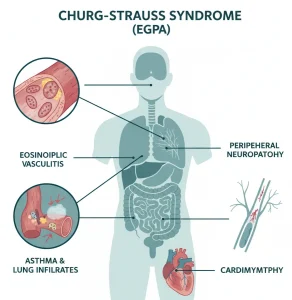
Churg-Strauss Syndrome, also known as Eosinophilic Granulomatosis with Polyangiitis (EGPA), is a rare autoimmune condition characterized by inflammation of small- to medium-sized blood vessels. This inflammation, known as vasculitis, can restrict blood flow and damage multiple organs throughout the body.
The condition most commonly affects individuals with a history of asthma or allergic disease. Churg-Strauss Syndrome typically develops in stages and can involve the lungs, skin, nerves, heart, gastrointestinal tract, and kidneys. Early diagnosis and treatment are important to prevent serious organ damage.
Symptoms
Symptoms of Churg-Strauss Syndrome vary depending on the stage of the disease and the organs involved.
Common symptoms include:
-
Adult-onset or worsening asthma
-
Chronic sinusitis or nasal congestion
-
Allergic rhinitis
-
Fatigue and weakness
-
Unexplained weight loss
-
Fever
-
Skin rashes, nodules, or purpura
-
Numbness, tingling, or weakness in the limbs due to nerve involvement
-
Shortness of breath or chest pain
-
Abdominal pain or gastrointestinal bleeding
Symptoms may progress over time as vascular inflammation increases.
Causes
The exact cause of Churg-Strauss Syndrome is not fully understood. It is believed to result from an abnormal immune response that leads to inflammation and increased levels of eosinophils, a type of white blood cell involved in allergic reactions.
Possible contributing factors include:
-
Autoimmune dysfunction
-
Genetic susceptibility
-
Environmental triggers
-
Certain medications that alter immune or asthma treatment responses
The condition is not contagious and does not result from infection.
Risk Factors
Certain factors increase the risk of developing Churg-Strauss Syndrome.
These include:
-
History of asthma, especially adult-onset asthma
-
Allergic conditions such as hay fever or nasal polyps
-
Elevated eosinophil levels
-
Use of certain asthma or allergy medications
-
Middle age, as the condition is more commonly diagnosed in adults
Both men and women can be affected.
Complications
If left untreated, Churg-Strauss Syndrome can lead to serious complications due to blood vessel inflammation and organ damage.
Possible complications include:
-
Peripheral nerve damage causing long-term weakness or numbness
-
Heart involvement, such as cardiomyopathy or heart failure
-
Lung damage
-
Kidney impairment
-
Gastrointestinal bleeding or perforation
-
Chronic sinus and nasal problems
Prompt treatment can reduce the risk of permanent organ damage.
Prevention
There is no known way to prevent Churg-Strauss Syndrome because its exact cause remains unclear. However, early recognition and management can significantly improve outcomes.
Helpful preventive and management strategies include:
-
Regular monitoring of asthma and allergy symptoms
-
Seeking medical evaluation for unexplained systemic symptoms
-
Following prescribed treatment plans closely
-
Attending regular follow-up appointments
-
Managing immune-related conditions under medical supervision
With appropriate treatment, many individuals with Churg-Strauss Syndrome can achieve symptom control and reduce the risk of severe complications.
Advertisement
