
Overview
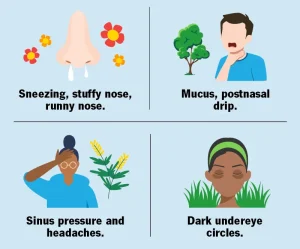
Hay fever, also known as allergic rhinitis, is a common allergic condition that affects the nose and eyes. It occurs when the immune system overreacts to allergens in the air, such as pollen, dust mites, mold spores, or pet dander. Despite its name, hay fever does not involve hay and does not cause a fever. Symptoms can be seasonal or year-round, depending on the allergens involved.
Symptoms
Symptoms of hay fever can range from mild to severe and often worsen with exposure to allergens. Common symptoms include:
-
Sneezing
-
Runny or blocked nose
-
Itchy nose, throat, or ears
-
Watery, red, or itchy eyes
-
Postnasal drip
-
Cough
-
Fatigue due to poor sleep
In children, hay fever may also cause frequent nose rubbing, known as the allergic salute.
Causes
Hay fever is caused by an allergic response to airborne substances. When a person with hay fever inhales an allergen, the immune system releases chemicals such as histamine, which trigger allergy symptoms. Common triggers include:
-
Tree, grass, and weed pollen
-
Dust mites
-
Mold spores
-
Animal dander
Risk Factors
Certain factors increase the risk of developing hay fever, including:
-
Family history of allergies or asthma
-
Personal history of asthma or eczema
-
Exposure to tobacco smoke
-
Living in areas with high pollen counts or pollution
-
Early-life exposure to allergens
Complications
If not well managed, hay fever can lead to several complications, such as:
-
Sinus infections
-
Middle ear infections
-
Poor sleep quality and daytime fatigue
-
Worsening of asthma symptoms
-
Reduced concentration and work or school performance
Prevention
While hay fever cannot always be prevented, symptoms can often be reduced by limiting exposure to allergens. Preventive measures include:
-
Monitoring pollen forecasts and staying indoors during high pollen periods
-
Keeping windows closed during allergy seasons
-
Using air purifiers and air conditioning
-
Washing hands, face, and hair after outdoor exposure
-
Regular cleaning to reduce dust mites and mold
-
Avoiding smoking and secondhand smoke
Early identification of triggers and appropriate treatment can significantly improve symptom control and quality of life for people with hay fever.
Advertisement
