
Overview
Egg allergy is a type of food allergy in which the immune system reacts abnormally to proteins found in eggs, most commonly egg whites, though egg yolks can also cause reactions. It is one of the most common food allergies in children, but some adults may also be affected. While many children outgrow egg allergy over time, others may continue to experience symptoms into adulthood.
Symptoms
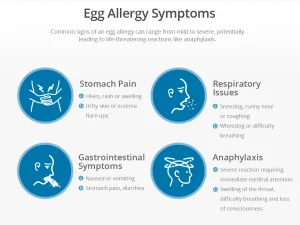
Symptoms of egg allergy usually appear within minutes to a few hours after consuming eggs or foods containing eggs. The severity can range from mild to severe and may include:
-
Skin reactions such as hives, redness, or itching
-
Swelling of the lips, face, tongue, or throat
-
Digestive symptoms including nausea, vomiting, abdominal pain, or diarrhea
-
Nasal congestion, sneezing, or runny nose
-
Wheezing, coughing, or shortness of breath
-
Anaphylaxis, a severe and potentially life-threatening reaction
Causes
Egg allergy occurs when the immune system mistakenly identifies egg proteins as harmful and produces antibodies against them. When eggs are consumed again, the immune system releases chemicals that trigger allergic symptoms. The proteins in egg whites are more likely to cause reactions, but sensitivity to egg yolks can also occur.
Risk Factors
Certain factors increase the likelihood of developing an egg allergy, including:
-
Family history of food allergies or allergic conditions
-
Other allergic conditions such as eczema, asthma, or hay fever
-
Young age, particularly infancy and early childhood
Complications
Egg allergy can lead to complications, especially if reactions are severe or frequent. Possible complications include:
-
Anaphylaxis requiring emergency medical treatment
-
Nutritional deficiencies if eggs are avoided without proper dietary planning
-
Increased anxiety or reduced quality of life due to fear of accidental exposure
-
Allergic reactions to vaccines that contain egg proteins in rare cases
Prevention
Egg allergy cannot always be prevented, but certain strategies may help reduce risk or manage the condition:
-
Avoiding eggs and egg-containing foods as advised by a healthcare provider
-
Carefully reading food labels and ingredient lists
-
Introducing eggs to infants at an appropriate age under medical guidance
-
Educating caregivers, teachers, and family members about the allergy
-
Carrying emergency medication if prescribed
Early diagnosis and proper management can help individuals with egg allergy lead safe and healthy lives.
Advertisement
