
Overview
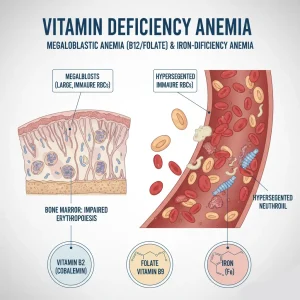
Vitamin deficiency anemia is a condition in which the body lacks sufficient vitamins needed for red blood cell production, leading to a reduced number of healthy red blood cells. The most common forms are caused by deficiencies in vitamin B12, folate (vitamin B9), or, less commonly, vitamin C. These vitamins are essential for red blood cell formation and DNA synthesis.
Vitamin deficiency anemia can cause fatigue, weakness, and other health issues. Early detection and treatment with dietary changes or supplements usually lead to full recovery.
Symptoms
Symptoms of vitamin deficiency anemia can vary depending on severity and the specific vitamin involved. Common symptoms include:
-
Fatigue and weakness
-
Pale or yellowish skin
-
Shortness of breath
-
Dizziness or lightheadedness
-
Heart palpitations
-
Numbness or tingling in hands and feet (common in B12 deficiency)
-
Difficulty concentrating or memory problems
-
Sore tongue or mouth ulcers
-
Mood changes or irritability
Causes
Vitamin deficiency anemia occurs when the body does not get enough vitamins necessary for red blood cell production. Causes include:
-
Inadequate dietary intake of vitamin B12 or folate
-
Poor absorption due to gastrointestinal disorders (e.g., celiac disease, Crohn’s disease)
-
Pernicious anemia, an autoimmune condition affecting B12 absorption
-
Certain medications that interfere with vitamin absorption
-
Pregnancy, which increases folate requirements
-
Alcoholism, which can impair absorption and increase vitamin loss
Risk Factors
Factors that increase the risk of developing vitamin deficiency anemia include:
-
Strict vegetarian or vegan diet without supplementation
-
Older age, which can reduce vitamin absorption
-
Pregnancy and breastfeeding
-
Chronic gastrointestinal disorders
-
History of gastrointestinal surgery
-
Alcohol use disorder
-
Certain medications, including proton pump inhibitors or metformin
Complications
If left untreated, vitamin deficiency anemia can lead to serious complications:
-
Severe fatigue affecting daily life
-
Neurological problems, especially with B12 deficiency (e.g., numbness, difficulty walking)
-
Heart problems, including palpitations or heart failure
-
Complications during pregnancy, including birth defects (folate deficiency)
-
Weak immune system and increased infection risk
Prevention
Vitamin deficiency anemia can often be prevented through proper diet and supplementation:
-
Consuming foods rich in vitamin B12 (meat, fish, eggs, dairy)
-
Eating folate-rich foods (leafy greens, legumes, fortified cereals)
-
Taking vitamin supplements when dietary intake is insufficient
-
Regular monitoring during pregnancy
-
Treating underlying gastrointestinal conditions that impair absorption
-
Educating at-risk populations, such as vegetarians or the elderly, about supplementation
Early recognition and treatment are essential to prevent complications and restore healthy red blood cell levels.
Advertisement
