
Overview
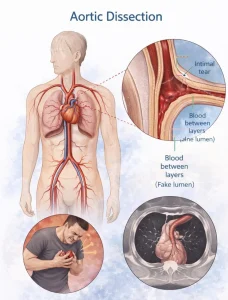
An aortic dissection is a life-threatening medical emergency that occurs when a tear develops in the inner layer of the aorta, the main artery that carries blood from the heart to the rest of the body. Blood flows rapidly through this tear, causing the inner and middle layers of the aortic wall to separate. This process is known as dissection.
If blood breaks through the outer wall of the aorta, the condition is often fatal. Aortic dissection is relatively uncommon but most often affects men in their 60s and 70s. Because symptoms can resemble those of a heart attack or other conditions, diagnosis may be delayed. Early recognition and prompt treatment significantly improve survival.
Aortic dissection is closely related to aortic aneurysm. A weakened or bulging area in the aortic wall increases the risk of both rupture and dissection.
Symptoms
Symptoms of aortic dissection usually begin suddenly and are often severe. They may include:
-
Sudden, intense chest or upper back pain that may spread to the neck or down the back and may feel tearing or ripping
-
Sudden, severe abdominal pain
-
Shortness of breath
-
Loss of consciousness
-
Stroke-like symptoms such as sudden trouble speaking, vision changes, or weakness on one side of the body
-
Leg pain or difficulty walking
Symptoms can vary depending on which part of the aorta is affected.
Causes
An aortic dissection occurs due to weakening of the aortic wall. Dissections are classified based on the location of the tear:
-
Type A involves the ascending aorta, where the aorta exits the heart. This type is more common and more dangerous and may extend into the abdomen.
-
Type B involves the descending aorta and may also extend into the abdominal area.
The underlying weakness may develop over time due to chronic conditions or structural abnormalities of the aorta.
Risk factors
Several conditions and factors increase the risk of aortic dissection:
-
Long-standing high blood pressure
-
Atherosclerosis
-
Aortic aneurysm
-
Bicuspid aortic valve
-
Aortic coarctation
Genetic and connective tissue disorders that increase risk include:
-
Marfan syndrome
-
Turner syndrome
-
Ehlers-Danlos syndrome
-
Loeys-Dietz syndrome
-
Giant cell arteritis
Other risk factors include:
-
Male sex
-
Age 60 or older
-
Cocaine use
-
Pregnancy, though rare
-
Intense weightlifting or strenuous resistance training
Complications
Aortic dissection can lead to serious and often fatal complications, including:
-
Severe internal bleeding and death
-
Stroke
-
Kidney failure
-
Damage to the intestines or other organs
-
Aortic valve regurgitation
-
Cardiac tamponade due to fluid buildup around the heart
-
Reduced blood flow to vital organs
The severity of complications depends on the location and extent of the dissection.
Prevention
Not all cases of aortic dissection can be prevented, but risk can be reduced through heart-healthy habits and medical management.
Preventive measures include:
-
Controlling blood pressure, cholesterol and blood sugar levels
-
Avoiding smoking and quitting if you currently smoke
-
Eating a balanced diet rich in fruits, vegetables and whole grains and low in sodium
-
Staying physically active with regular, moderate exercise
-
Maintaining a healthy weight
-
Getting adequate sleep
-
Wearing a seat belt to prevent chest injuries
-
Avoiding illicit drug use such as cocaine
People with a family history of aortic disease, connective tissue disorders or known aortic aneurysms should have regular medical follow-up. In some cases, preventive medications or surgery may be recommended to reduce the risk of dissection.
Advertisement
