
Overview
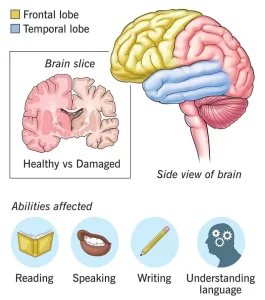
Primary progressive aphasia is a neurological condition that gradually affects a person’s ability to communicate. It is a type of neurodegenerative disorder in which the areas of the brain responsible for language slowly deteriorate. Unlike other conditions that affect memory first, primary progressive aphasia mainly impacts speaking, understanding language, reading, and writing.
The condition usually develops in middle adulthood and progresses over time. In the early stages, individuals may have difficulty finding the right words or forming sentences. As the disease advances, communication becomes increasingly challenging.
Primary progressive aphasia is often linked to certain types of brain degeneration similar to those seen in other neurological diseases. Although there is no cure, supportive therapies can help maintain communication abilities and improve quality of life.
Symptoms
Symptoms of primary progressive aphasia develop gradually and mainly affect language and communication skills.
Common symptoms include:
-
Difficulty finding the right words while speaking
-
Speaking slowly or with frequent pauses
-
Trouble understanding spoken or written language
-
Problems with grammar or sentence structure
-
Difficulty naming familiar objects
-
Trouble reading or writing
As the condition progresses, individuals may experience more severe communication difficulties and may rely on gestures or alternative methods to express themselves.
Causes
Primary progressive aphasia is caused by gradual damage to the brain regions responsible for language, usually located in the left side of the brain. This damage occurs due to abnormal protein buildup in brain cells, which leads to the degeneration of nerve cells.
Different types of protein abnormalities can be involved, and these changes are also seen in some other neurodegenerative diseases. The exact reason why these changes occur is not fully understood.
In some cases, the condition may be related to genetic factors, although most cases occur without a clear family history.
Risk factors
Certain factors may increase the likelihood of developing primary progressive aphasia.
-
Age, most commonly affecting people between 50 and 70 years
-
Family history of neurodegenerative diseases
-
Certain genetic mutations affecting brain function
However, many individuals diagnosed with the condition do not have clear risk factors.
Complications
As primary progressive aphasia progresses, it can lead to several complications related to communication and daily functioning.
Possible complications include:
-
Severe difficulty with speech and language
-
Challenges in social interactions
-
Increased dependence on caregivers
-
Emotional distress, anxiety, or depression
-
Development of other neurological symptoms in later stages
Over time, the disease may affect additional brain functions beyond language.
Prevention
There is currently no known way to prevent primary progressive aphasia because the underlying causes are related to neurodegenerative changes in the brain. However, early diagnosis and supportive care can help manage symptoms and maintain communication abilities for as long as possible.
-
Seek medical evaluation if persistent language difficulties occur
-
Participate in speech and language therapy
-
Use communication aids such as writing tools or digital devices
-
Maintain regular medical monitoring for neurological health
-
Encourage cognitive activities that stimulate the brain
Support from healthcare professionals, family members, and therapists can help individuals adapt to communication challenges and maintain a better quality of life.
Request an appointment
Advertisement
