
Overview
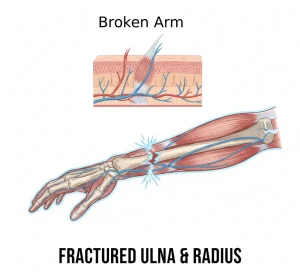
A broken arm refers to a fracture in one or more of the bones of the arm. This can include the upper arm bone (humerus), the two forearm bones (radius and ulna), or bones near the wrist or elbow. Broken arms are common injuries that can occur at any age and range from small cracks in the bone to severe breaks where the bone is displaced or protrudes through the skin. Prompt diagnosis and proper treatment are important to ensure correct healing and restore normal arm function.
Symptoms
The symptoms of a broken arm can vary depending on the location and severity of the fracture. Common symptoms include:
-
Sudden pain at the time of injury that worsens with movement
-
Swelling, tenderness, or bruising around the injured area
-
Visible deformity or abnormal positioning of the arm
-
Difficulty or inability to move the arm, wrist, or fingers
-
Numbness or tingling if nearby nerves are affected
In severe cases, the bone may break through the skin, which is considered a medical emergency.
Causes
A broken arm usually occurs due to direct force or trauma. Common causes include:
-
Falls, especially landing on an outstretched arm
-
Sports injuries, such as contact sports or high-impact activities
-
Motor vehicle accidents
-
Direct blows to the arm from accidents or assaults
-
Weakened bones due to underlying medical conditions
Risk factors
Certain factors can increase the risk of sustaining a broken arm:
-
Participation in high-risk sports or physical activities
-
Poor balance or coordination, increasing the likelihood of falls
-
Osteoporosis or other conditions that weaken bones
-
Advanced age, as bones tend to become more fragile
-
Lack of protective equipment during sports or work-related activities
Complications
Most broken arms heal well with appropriate treatment, but complications can occur, especially if the injury is severe or not treated properly. Possible complications include:
-
Improper bone healing, such as delayed healing or bones healing in the wrong position
-
Stiffness or reduced range of motion in the arm or joints
-
Damage to nearby nerves or blood vessels
-
Chronic pain or weakness in the affected arm
-
Infection, particularly in open fractures
Prevention
While not all broken arms can be prevented, certain steps can reduce the risk:
-
Using protective gear during sports and high-risk activities
-
Maintaining strong bones through adequate calcium and vitamin D intake
-
Engaging in regular weight-bearing and strength-training exercises
-
Taking measures to prevent falls, especially in older adults
-
Following safety guidelines at work, on the road, and during recreational activities
Early medical evaluation after an arm injury can help prevent complications and support proper healing.
Advertisement
