
Overview
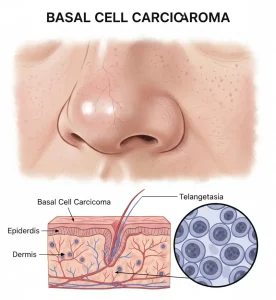
Basal cell carcinoma is the most common type of skin cancer. It develops in the basal cells, which are found in the lower part of the outer layer of the skin. This cancer usually appears on areas of the body that receive frequent sun exposure, such as the face, neck, and arms. Basal cell carcinoma typically grows slowly and rarely spreads to other parts of the body, but it can cause local tissue damage if not treated early.
Symptoms
Basal cell carcinoma can look different from person to person and may resemble noncancerous skin conditions. Common symptoms include:
-
A pearly or waxy bump on the skin
-
A flat, flesh-colored or brown scar-like lesion
-
A sore that bleeds, scabs over, and does not heal
-
A raised red patch that may itch or crust
-
A shiny bump with visible blood vessels
Changes in size, color, or texture over time may indicate skin cancer.
Causes
Basal cell carcinoma is mainly caused by damage to the DNA of skin cells, most often due to ultraviolet radiation. This damage leads to uncontrolled cell growth. Common causes include:
-
Long-term exposure to sunlight
-
Use of tanning beds or sunlamps
-
Repeated sunburns, especially during childhood
-
Exposure to radiation or certain chemicals
The risk increases with cumulative sun exposure over time.
Risk factors
Several factors increase the risk of developing basal cell carcinoma. These include:
-
Fair skin that burns easily
-
Light-colored eyes or hair
-
Chronic sun exposure or outdoor occupations
-
Increasing age
-
Personal or family history of skin cancer
-
Weakened immune system
People living in sunny or high-altitude regions may also be at higher risk.
Complications
Basal cell carcinoma is usually highly treatable, but complications can occur if it is ignored or left untreated. Possible complications include local tissue destruction, scarring, and disfigurement, particularly when the cancer affects the face. In rare cases, the cancer can grow deeper into surrounding tissues, including bone or nerves, making treatment more complex.
Prevention
Many cases of basal cell carcinoma can be prevented by protecting the skin from ultraviolet exposure. Preventive measures include:
-
Using broad-spectrum sunscreen regularly
-
Wearing protective clothing, hats, and sunglasses
-
Avoiding sun exposure during peak daylight hours
-
Not using tanning beds
-
Performing regular skin self-examinations
Early detection and prompt treatment greatly reduce the risk of complications and improve outcomes.
Advertisement
