
Overview
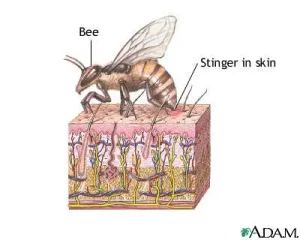
A bee sting occurs when a bee injects venom into the skin through its stinger as a defense mechanism. Most bee stings cause mild, short-term reactions such as pain, redness, and swelling at the site. In some cases, the reaction can be more severe, especially in people who are allergic to bee venom.
Bee stings are common during outdoor activities and warmer months. While most stings can be managed at home, severe allergic reactions require immediate medical attention.
Symptoms
Symptoms of a bee sting vary depending on an individual’s sensitivity to the venom.
Common symptoms include:
-
Sudden sharp pain at the sting site
-
Redness and mild swelling
-
Itching or burning sensation
-
A small white spot where the stinger entered the skin
Moderate reactions may involve increased swelling and redness that can last several days.
Severe allergic reactions may include:
-
Difficulty breathing or wheezing
-
Swelling of the face, lips, tongue, or throat
-
Hives or widespread skin rash
-
Dizziness or fainting
-
Rapid heartbeat
-
Nausea or vomiting
Severe symptoms indicate an emergency condition known as anaphylaxis.
Causes
A bee sting happens when a bee feels threatened and uses its stinger to protect itself. Honeybees leave their stinger in the skin, which continues to release venom for a short time after the sting.
Common causes include:
-
Accidental contact with a bee
-
Disturbing a beehive or nest
-
Walking barefoot outdoors
-
Wearing bright colors or strong fragrances that attract bees
-
Eating or drinking sweet foods outdoors
Most stings are defensive rather than aggressive.
Risk factors
Some people are more likely to be stung or to have stronger reactions.
Risk factors include:
-
Spending time outdoors, especially in gardens or near flowering plants
-
Occupations involving outdoor work
-
Previous allergic reaction to a bee sting
-
Lack of protective clothing when outdoors
-
Children, who may unknowingly provoke bees
Having a known allergy significantly increases the risk of severe reactions.
Complications
Most bee stings heal without complications, but problems can occur in certain cases.
Possible complications include:
-
Secondary skin infection from scratching
-
Large local swelling that limits movement
-
Severe allergic reactions such as anaphylaxis
-
Multiple stings leading to toxic venom effects, especially in children or older adults
Prompt treatment reduces the risk of serious outcomes.
Prevention
Preventing bee stings involves reducing exposure and avoiding actions that attract or provoke bees.
Preventive measures include:
-
Wearing light-colored, protective clothing outdoors
-
Avoiding strong perfumes, lotions, or hair products
-
Keeping food and drinks covered when outside
-
Walking carefully and avoiding barefoot activities outdoors
-
Staying calm and moving away slowly if a bee is nearby
-
Seeking professional help to remove bee nests near living areas
People with known bee sting allergies should carry emergency medication as advised by their healthcare provider.
Advertisement
