
Overview
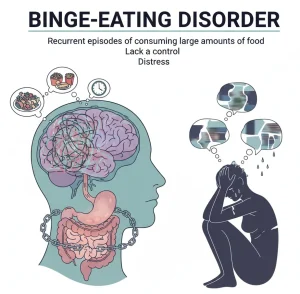
Binge-eating disorder is a serious eating disorder characterized by recurrent episodes of eating unusually large amounts of food in a short period of time, accompanied by a feeling of loss of control. Unlike some other eating disorders, binge-eating disorder does not involve regular behaviors such as purging or excessive exercise to compensate for overeating.
The condition can affect people of all ages and genders. It often leads to emotional distress, physical health problems, and reduced quality of life if not recognized and managed appropriately.
Symptoms
Symptoms of binge-eating disorder involve both eating behaviors and emotional responses.
Common symptoms include:
-
Eating large amounts of food even when not physically hungry
-
Feeling unable to stop eating or control what or how much is eaten
-
Eating much more rapidly than normal
-
Eating alone due to embarrassment
-
Feeling uncomfortably full after eating
-
Feelings of guilt, shame, or distress after binge episodes
Binge episodes typically occur at least once a week over a period of time.
Causes
The exact cause of binge-eating disorder is not fully understood. It is believed to result from a combination of psychological, biological, and environmental factors.
Possible causes include:
-
Emotional stress, anxiety, or depression
-
Genetic predisposition
-
Imbalances in brain chemicals that regulate appetite and mood
-
History of restrictive dieting
-
Negative body image or low self-esteem
No single factor is responsible, and causes vary between individuals.
Risk factors
Certain factors increase the likelihood of developing binge-eating disorder.
Risk factors include:
-
Family history of eating disorders
-
History of dieting or weight cycling
-
Psychological conditions such as depression or anxiety
-
Traumatic or stressful life events
-
Social pressure related to body image
The disorder can begin in adolescence or adulthood.
Complications
Without treatment, binge-eating disorder can lead to significant physical and emotional complications.
Possible complications include:
-
Obesity and weight-related health problems
-
Type 2 diabetes
-
High blood pressure and heart disease
-
Digestive problems
-
Depression and anxiety
-
Low self-esteem and social isolation
Early treatment improves both physical and mental health outcomes.
Prevention
There is no guaranteed way to prevent binge-eating disorder, but certain strategies may help reduce risk.
Helpful preventive measures include:
-
Promoting healthy attitudes toward food and body image
-
Avoiding extreme dieting or restrictive eating patterns
-
Managing stress through healthy coping strategies
-
Seeking support for emotional or mental health concerns
-
Encouraging open conversations about eating behaviors
Early recognition and professional support play an important role in preventing long-term complications of binge-eating disorder.
Advertisement
