
Overview
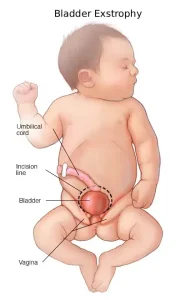
Bladder exstrophy is a rare congenital condition in which the bladder develops outside the body. It occurs when the lower abdominal wall and the front of the bladder do not form properly during fetal development. As a result, the inner surface of the bladder is exposed, and urine drains directly from the bladder rather than being stored normally.
Bladder exstrophy is present at birth and is often associated with abnormalities of the urinary tract, reproductive organs, pelvic bones, and abdominal muscles. Early surgical treatment is usually required to protect the bladder and improve urinary function.
Symptoms
Symptoms of bladder exstrophy are visible at birth and may vary in severity. Common features include:
-
An open bladder exposed on the lower abdomen
-
Continuous leakage of urine
-
Abnormally positioned belly button
-
Widely separated pelvic bones
-
Genital abnormalities, such as a split or shortened penis in males or differences in the external genitalia in females
As the child grows, urinary control and recurrent urinary infections may become concerns if not properly managed.
Causes
The exact cause of bladder exstrophy is not fully understood. The condition occurs early in pregnancy when the tissues that form the lower abdominal wall and bladder fail to close completely.
Possible contributing factors include:
-
Genetic influences
-
Abnormal development of the abdominal wall during early fetal growth
-
Disruption in the formation of the cloacal membrane
Bladder exstrophy is not caused by anything the parents did or did not do during pregnancy.
Risk factors
Because bladder exstrophy is rare, clear risk factors are not well defined. Factors that may increase the likelihood include:
-
Family history of bladder exstrophy or related birth defects
-
Male sex, as the condition is more common in males
-
Certain genetic variations
Most cases occur without any known risk factors.
Complications
Without proper treatment, bladder exstrophy can lead to several complications, including:
-
Recurrent urinary tract infections
-
Difficulty achieving urinary continence
-
Kidney damage due to urine reflux
-
Sexual and fertility issues later in life
-
Emotional and psychological challenges related to body image
With modern surgical techniques, many individuals achieve good urinary function and quality of life.
Prevention
There is no known way to prevent bladder exstrophy. Because the condition develops very early in pregnancy, preventive measures are limited.
General recommendations include:
-
Regular prenatal care
-
Genetic counseling for families with a history of bladder exstrophy
-
Early diagnosis and prompt surgical management after birth
Early medical intervention plays a key role in reducing complications and supporting long-term health outcomes.
Request an appointment
Advertisement
