
Overview
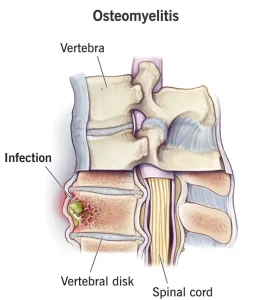
Osteomyelitis is a serious bone infection caused by bacteria, fungi, or, rarely, other microorganisms. The infection can affect any bone in the body but is most common in the long bones of the arms and legs, spine, or pelvis. Osteomyelitis can develop suddenly (acute) or persist over time (chronic), leading to bone destruction and impaired function if left untreated.
Symptoms
Symptoms of osteomyelitis may develop gradually or suddenly depending on the severity and type of infection:
-
Bone pain and tenderness at the infection site
-
Swelling, warmth, or redness over the affected area
-
Fever and chills
-
Fatigue or general malaise
-
Limited movement in the affected limb or joint
-
Drainage of pus from an open wound near the infected bone
-
Night sweats or unexplained weight loss in chronic cases
Causes
Osteomyelitis occurs when infectious agents invade the bone tissue. Common causes include:
-
Bacterial infection, often Staphylococcus aureus
-
Spread from nearby infected tissue or open fractures
-
Bloodstream infections that reach the bone
-
Post-surgical infections following orthopedic procedures
-
Use of contaminated medical devices or implants
Risk Factors
Certain conditions and behaviors increase the likelihood of developing osteomyelitis:
-
Diabetes or poor circulation
-
Recent bone injury or fracture
-
Surgical procedures involving bones or joints
-
Weakened immune system due to illness or medications
-
Chronic skin infections or ulcers
-
Intravenous drug use
Complications
If not treated promptly, osteomyelitis can lead to severe complications:
-
Chronic bone infection
-
Bone destruction and deformities
-
Abscess formation
-
Spread of infection to nearby tissues or bloodstream
-
Reduced mobility and function of the affected limb
-
Amputation in severe or untreated cases
Prevention
Preventive strategies focus on reducing the risk of infection and supporting bone health:
-
Promptly treating wounds and skin infections
-
Maintaining good hygiene and wound care
-
Managing chronic conditions such as diabetes
-
Using sterile techniques during surgery or injections
-
Seeking early medical attention for bone pain, swelling, or fever
-
Avoiding intravenous drug use
Advertisement
