
Overview
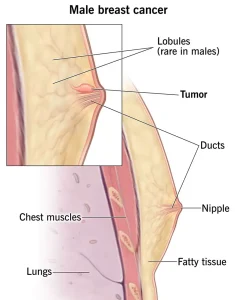
Male breast cancer is a rare type of cancer that develops in the breast tissue of men. Although breast cancer is much more common in women, men also have breast tissue and can develop malignant tumors. Male breast cancer usually occurs later in life and is often diagnosed at an advanced stage because it is less commonly suspected.
The condition begins when breast cells grow abnormally and form a tumor. Early detection improves treatment outcomes, but awareness of symptoms is often low. With timely diagnosis and appropriate treatment, many men with breast cancer can be treated successfully.
Symptoms
Symptoms of male breast cancer are often similar to those seen in female breast cancer and usually affect only one breast.
Common symptoms include:
-
A painless lump or thickening in the breast tissue
-
Changes in the size or shape of the breast
-
Dimpling, redness, or scaling of the skin on the breast
-
Nipple changes, such as redness or inversion
-
Discharge from the nipple, sometimes bloody
-
Pain or tenderness in the breast or nipple area
Because these symptoms are often ignored or mistaken for benign conditions, medical evaluation is important if any changes are noticed.
Causes
Male breast cancer develops when breast cells undergo genetic changes that cause them to grow uncontrollably. The exact cause of these changes is not always known.
Factors that may contribute include:
-
Hormonal imbalances, particularly increased estrogen levels
-
Genetic mutations, including changes in the BRCA1 or BRCA2 genes
-
Exposure to radiation therapy involving the chest
-
Certain inherited conditions that affect hormone levels
These factors can increase the likelihood of abnormal cell growth in male breast tissue.
Risk factors
Several factors can increase the risk of developing male breast cancer.
Risk factors include:
-
Increasing age, most commonly over 60
-
Family history of breast cancer
-
Inherited gene mutations
-
Conditions that increase estrogen levels, such as liver disease or obesity
-
Klinefelter syndrome, a genetic condition affecting males
-
Previous radiation exposure to the chest area
Having one or more risk factors does not guarantee cancer will develop, but it increases the likelihood.
Complications
Male breast cancer can lead to complications if not treated promptly or effectively.
Possible complications include:
-
Spread of cancer to lymph nodes or other organs
-
Chronic pain or discomfort
-
Emotional distress and anxiety
-
Side effects related to surgery, chemotherapy, radiation, or hormone therapy
-
Reduced quality of life
Early diagnosis and comprehensive treatment help reduce the risk of complications.
Prevention
There is no guaranteed way to prevent male breast cancer, but certain steps may help lower risk or support early detection.
Preventive measures may include:
-
Regular self-examination of the breast area
-
Seeking medical evaluation for any breast changes
-
Genetic counseling and testing for those with a strong family history
-
Maintaining a healthy weight
-
Managing underlying conditions that affect hormone balance
Awareness, early recognition of symptoms, and timely medical care play an important role in improving outcomes for male breast cancer.
Advertisement
