
Overview
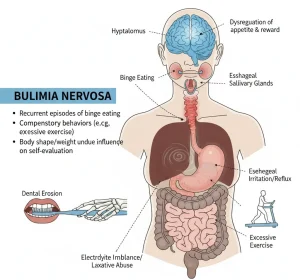
Bulimia nervosa is a serious eating disorder characterized by repeated episodes of binge eating followed by behaviors intended to prevent weight gain. These behaviors may include self-induced vomiting, misuse of laxatives or diuretics, fasting, or excessive exercise. People with bulimia often feel a loss of control during binge episodes and experience intense concern about body weight and shape. The condition can affect physical health, mental well-being, and daily functioning.
Symptoms
Symptoms of bulimia nervosa can be physical, behavioral, and emotional. Common symptoms include:
-
Recurrent episodes of eating large amounts of food in a short time
-
Feeling out of control during binge eating
-
Purging behaviors such as vomiting or laxative use
-
Frequent dieting, fasting, or excessive exercise
-
Swelling of the cheeks or jaw area
-
Sore throat or dental problems from repeated vomiting
-
Feelings of shame, guilt, or secrecy around eating
Causes
The exact cause of bulimia nervosa is not fully understood, but it is believed to result from a combination of factors. Possible causes include:
-
Psychological factors such as low self-esteem, anxiety, or depression
-
Social pressure related to body image and weight
-
Biological or genetic vulnerability
-
Stressful life events or trauma
-
Cultural emphasis on thinness
These factors interact to influence eating behaviors and coping mechanisms.
Risk factors
Several factors may increase the risk of developing bulimia nervosa:
-
Adolescence or young adulthood
-
Female sex, though males can also be affected
-
Family history of eating disorders or mental health conditions
-
History of dieting or weight-related teasing
-
High levels of stress or perfectionism
Complications
If left untreated, bulimia nervosa can lead to serious medical and psychological complications:
-
Electrolyte imbalances that may affect heart rhythm
-
Gastrointestinal problems, including inflammation or tears
-
Dental erosion and gum disease
-
Dehydration and kidney problems
-
Mental health issues such as depression or anxiety
-
Increased risk of substance misuse
Early treatment improves recovery and reduces long-term health risks.
Prevention
There is no guaranteed way to prevent bulimia nervosa, but certain strategies may reduce risk and support early intervention:
-
Promoting a healthy relationship with food and body image
-
Encouraging open conversations about mental health
-
Reducing exposure to unrealistic body standards
-
Seeking help early for disordered eating behaviors
-
Supporting stress management and emotional coping skills
Awareness, early recognition, and access to professional care are key to preventing complications and supporting recovery.
Advertisement
