
Overview
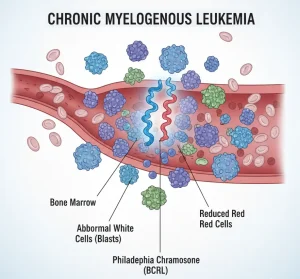
Chronic Myelogenous Leukemia (CML), also known as Chronic Myeloid Leukemia, is a type of blood cancer that begins in the bone marrow and results in the overproduction of abnormal white blood cells. These cells do not function properly and gradually accumulate in the blood and bone marrow, interfering with the production of healthy blood cells.
CML typically progresses slowly in its early stages and is most commonly diagnosed in adults. Advances in targeted therapies have significantly improved long-term outcomes for many individuals with this condition.
Symptoms
Symptoms of Chronic Myelogenous Leukemia may be mild or absent in the early phase and often develop gradually.
Common symptoms include:
-
Persistent fatigue and weakness
-
Unexplained weight loss
-
Fever or night sweats
-
Abdominal discomfort due to an enlarged spleen
-
Loss of appetite or early fullness
-
Frequent infections
-
Easy bruising or bleeding
-
Bone or joint pain
-
Shortness of breath
Some cases are discovered during routine blood tests before symptoms appear.
Causes
Chronic Myelogenous Leukemia is caused by a genetic change in bone marrow cells known as the Philadelphia chromosome. This abnormal chromosome leads to the formation of the BCR-ABL gene, which produces an enzyme that causes uncontrolled growth of white blood cells.
Key points about the cause include:
-
The genetic change occurs after birth and is not inherited
-
The mutation affects bone marrow stem cells
-
It leads to abnormal cell signaling and excessive cell production
The exact trigger for this genetic change is often unknown.
Risk Factors
Several factors may increase the risk of developing Chronic Myelogenous Leukemia.
These include:
-
Older age, with most cases occurring in middle-aged and older adults
-
Male sex
-
Exposure to high levels of radiation
-
Previous radiation therapy for other cancers
Most people diagnosed with CML have no clearly identifiable risk factors.
Complications
If not effectively managed, Chronic Myelogenous Leukemia can lead to serious complications as the disease progresses.
Possible complications include:
-
Progression to an accelerated or blast phase
-
Severe anemia
-
Increased risk of infections
-
Bleeding due to low platelet counts
-
Enlarged spleen causing pain or fullness
-
Reduced response to treatment over time
Regular monitoring helps detect disease progression early.
Prevention
There is no proven way to prevent Chronic Myelogenous Leukemia, as its primary cause is a spontaneous genetic mutation.
General preventive and health-supporting measures include:
-
Minimizing unnecessary exposure to radiation
-
Following workplace safety guidelines
-
Maintaining a healthy lifestyle to support immune function
-
Attending routine medical checkups
-
Seeking medical evaluation for persistent or unexplained symptoms
Early diagnosis and modern targeted therapies have greatly improved survival rates and quality of life for individuals with Chronic Myelogenous Leukemia.
Advertisement
