
Overview
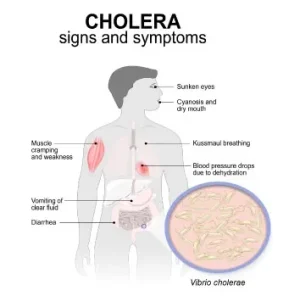
Cholera is an acute infectious disease caused by the bacterium Vibrio cholerae. It primarily affects the small intestine and leads to severe watery diarrhea and dehydration. Cholera is usually transmitted through contaminated water or food and is most common in areas with poor sanitation and limited access to clean drinking water. If not treated promptly, cholera can be life-threatening, but with early intervention, it is highly treatable.
Symptoms
Symptoms of cholera can appear within a few hours to several days after exposure. While some people may have mild or no symptoms, others can develop severe illness rapidly.
Common symptoms include:
-
Sudden onset of profuse watery diarrhea, often described as rice-water stools
-
Vomiting
-
Rapid loss of body fluids
-
Thirst and dry mouth
-
Muscle cramps
Severe symptoms may include:
-
Severe dehydration
-
Low blood pressure
-
Rapid heart rate
-
Sunken eyes
-
Reduced urine output
-
Shock in extreme cases
Causes
Cholera is caused by infection with Vibrio cholerae bacteria. The bacteria produce a toxin that causes the intestines to secrete large amounts of water and electrolytes.
Major causes include:
-
Drinking water contaminated with human waste
-
Eating food contaminated during preparation or storage
-
Consuming raw or undercooked seafood from contaminated water
-
Poor sanitation and hygiene practices
The bacteria spread easily in areas where clean water and proper sewage disposal are lacking.
Risk Factors
Certain conditions and environments increase the risk of contracting cholera.
Key risk factors include:
-
Living in or traveling to areas with poor sanitation
-
Lack of access to safe drinking water
-
Overcrowded living conditions
-
Consumption of untreated or unsafe water
-
Low stomach acid levels
-
Malnutrition, especially in children
Complications
Without prompt treatment, cholera can lead to serious and potentially fatal complications.
Possible complications include:
-
Severe dehydration
-
Electrolyte imbalance
-
Kidney failure
-
Shock
-
Death if untreated
Children, older adults, and individuals with weakened immunity are at higher risk of severe complications.
Prevention
Cholera is largely preventable through proper sanitation, hygiene, and access to clean water.
Effective prevention strategies include:
-
Drinking only safe, treated, or boiled water
-
Washing hands regularly with soap and clean water
-
Eating freshly cooked food and avoiding raw or undercooked seafood
-
Using proper sanitation and sewage disposal systems
-
Vaccination in high-risk areas or before travel to endemic regions
Early recognition of symptoms and rapid rehydration treatment are essential to reduce the severity and prevent fatal outcomes associated with cholera.
Advertisement
