
Overview
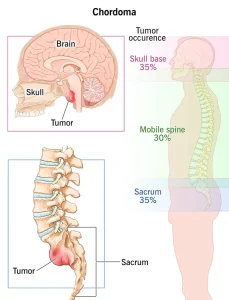
Chordoma is a rare type of cancer that develops from remnants of the notochord, a structure present during early fetal development that helps form the spine. These tumors typically grow slowly but are locally aggressive and most often occur at the base of the skull (clivus) or in the spine, particularly the sacrum. Although chordomas grow gradually, they can cause significant damage by pressing on nearby nerves, bones, and vital structures.
Symptoms
Symptoms of chordoma depend on the tumor’s size and location and often develop gradually over time.
Common symptoms include:
-
Persistent localized pain in the spine or skull base
-
Headaches, especially for skull base tumors
-
Neck or back stiffness
-
Numbness or weakness in the arms or legs
Additional symptoms based on location may include:
-
Difficulty swallowing or speaking
-
Vision problems or double vision
-
Bowel or bladder dysfunction
-
Balance or coordination problems
Causes
The exact cause of chordoma is not fully understood. It arises from notochordal cell remnants that persist after birth and later undergo abnormal growth.
Contributing factors include:
-
Abnormal cell growth of notochord remnants
-
Genetic changes affecting cell regulation
Chordoma is not typically linked to environmental exposures or lifestyle factors.
Risk Factors
Chordoma is rare, and only a few risk factors have been identified.
Key risk factors include:
-
Increasing age, most commonly diagnosed in adults between 40 and 70 years
-
Male sex
-
Rare genetic conditions involving duplication of the T gene (brachyury)
Most cases occur sporadically without a family history.
Complications
Chordoma can lead to serious complications due to its location near critical neurological and structural areas.
Potential complications include:
-
Nerve compression leading to weakness or paralysis
-
Chronic pain
-
Difficulty walking or maintaining balance
-
Bowel and bladder dysfunction
-
Recurrence after treatment
-
Reduced quality of life due to functional impairment
Advanced tumors may be difficult to completely remove and manage.
Prevention
There is no known way to prevent chordoma because its exact cause is unknown and it is not linked to modifiable risk factors.
Preventive and management strategies focus on:
-
Early evaluation of persistent or unexplained neurological symptoms
-
Regular monitoring in individuals diagnosed with chordoma
-
Timely medical intervention to limit tumor growth and complications
Early diagnosis and specialized treatment planning are essential to improving outcomes and managing the long-term effects of chordoma.
Request an appointment
Advertisement
