
Overview
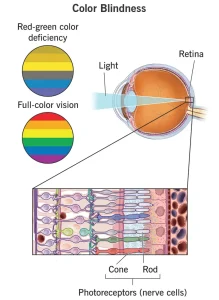
Color blindness, also known as color vision deficiency, is a condition in which an individual has difficulty distinguishing certain colors. It occurs when the cones in the retina, which are responsible for detecting color, do not function properly or are absent.
The most common type is red-green color blindness, but some individuals may have difficulty with blue-yellow distinction or complete color blindness (achromatopsia). While the condition is usually inherited, it can also result from eye injuries, certain diseases, or medications. Color blindness is not a form of blindness, as vision clarity is usually normal.
Symptoms
Symptoms of color blindness vary depending on the type and severity of the condition.
Common signs include:
-
Difficulty distinguishing between red and green, or blue and yellow
-
Confusion of similar shades of colors
-
Difficulty reading colored text or interpreting traffic lights
-
Relying on brightness or position rather than color to differentiate objects
-
Difficulty in occupations that require color discrimination
Some individuals may not realize they have color blindness until tested.
Causes
Color blindness is caused by abnormalities in the photoreceptor cells (cones) in the retina, which detect light and color.
Common causes include:
-
Genetic inheritance, usually X-linked recessive, making it more common in males
-
Eye diseases such as glaucoma, macular degeneration, or diabetic retinopathy
-
Aging, which can affect color perception
-
Certain medications or chemical exposures
-
Eye injuries that damage the retina or optic nerve
Inherited color blindness is present from birth.
Risk Factors
Factors that increase the risk of color blindness include:
-
Male sex, due to X-linked inheritance
-
Family history of color vision deficiency
-
Aging, which can affect color perception
-
Eye diseases or conditions affecting the retina or optic nerve
-
Exposure to certain chemicals or medications
Complications
Color blindness generally does not cause blindness, but it can lead to challenges in daily life.
Possible complications include:
-
Difficulty in educational or occupational tasks requiring color recognition
-
Challenges in choosing clothing or matching colors
-
Safety risks, such as misinterpreting traffic lights or warning signals
-
Emotional or social challenges related to color perception limitations
Prevention
Inherited color blindness cannot be prevented, but some measures can help reduce acquired cases and manage the condition:
-
Protecting eyes from injury and harmful chemicals
-
Managing chronic eye diseases with regular checkups
-
Using color-corrective lenses or visual aids for improved color perception
-
Education and awareness about the condition to adapt daily activities
Early diagnosis through color vision testing helps individuals adapt strategies to navigate color-dependent tasks effectively.
Request an appointment
Advertisement
