
Overview
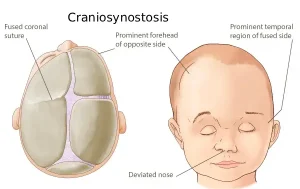
Craniosynostosis is a condition in which one or more of the fibrous joints between an infant’s skull bones, called sutures, close too early. Because an infant’s skull needs to expand to allow normal brain growth, premature suture fusion can lead to abnormal head shape and, in some cases, increased pressure inside the skull. Craniosynostosis may occur as an isolated condition or as part of a genetic syndrome and is usually present at birth or develops shortly afterward.
Symptoms
Symptoms of craniosynostosis depend on which sutures are affected and how many close prematurely.
Common symptoms include:
-
Abnormally shaped head or skull
-
A hard ridge along the affected suture
-
Uneven or asymmetrical facial features
-
Slow or absent growth of the skull in certain areas
-
Bulging or full soft spot on the head
-
Developmental delays in more severe cases
-
Signs of increased intracranial pressure such as irritability, vomiting, or poor feeding
Symptoms may become more noticeable as the baby grows.
Causes
Craniosynostosis occurs when skull sutures fuse earlier than normal, but the exact reason is often unknown.
Possible causes include:
-
Genetic mutations affecting skull development
-
Inherited syndromes such as Apert, Crouzon, or Pfeiffer syndromes
-
Abnormal bone metabolism
-
Environmental factors affecting fetal development
-
Unknown developmental abnormalities during pregnancy
Many cases are sporadic and not linked to a family history.
Risk factors
Several factors may increase the risk of craniosynostosis.
Risk factors include:
-
Family history of craniosynostosis
-
Certain genetic syndromes
-
Maternal thyroid disease during pregnancy
-
Use of certain medications during pregnancy
-
Restricted space in the womb, such as with multiple pregnancies
Most affected infants have no identifiable risk factors.
Complications
If not treated, craniosynostosis can lead to serious complications related to brain and skull growth.
Possible complications include:
-
Increased intracranial pressure
-
Vision problems due to pressure on the optic nerves
-
Developmental and learning delays
-
Seizures in severe cases
-
Permanent facial and skull deformities
-
Breathing or feeding difficulties
Early diagnosis and treatment help reduce the risk of long-term complications.
Prevention
There is no guaranteed way to prevent craniosynostosis, especially when it is related to genetic factors.
General preventive measures include:
-
Proper prenatal care and monitoring during pregnancy
-
Genetic counseling for families with a history of craniosynostosis
-
Avoiding unnecessary medication use during pregnancy
-
Early evaluation of abnormal head shape in infants
-
Regular pediatric checkups to monitor skull growth and development
Timely medical intervention can significantly improve outcomes for affected children.
Request an appointment
Advertisement
