
Overview
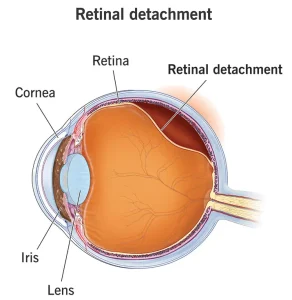
Retinal detachment is a serious eye condition in which the retina, the light-sensitive layer at the back of the eye, separates from the underlying supportive tissue. This separation prevents the retina from functioning properly, leading to vision loss. Retinal detachment is a medical emergency that requires prompt diagnosis and treatment to prevent permanent blindness. It is more common in older adults, people with severe nearsightedness, or those who have had eye injuries or surgeries.
Retinal Detachment Symptoms
Symptoms often develop suddenly and may include:
-
Sudden appearance of floaters (small dark spots or strings in vision)
-
Flashes of light in one or both eyes
-
Shadow or curtain effect over part of the visual field
-
Blurred or distorted vision
-
Gradual reduction in peripheral vision
-
Sudden loss of vision in severe cases
Retinal Detachment Causes
Retinal detachment occurs when the retina is pulled away from its underlying tissue. Common causes include:
-
Age-related changes causing retinal thinning or tears
-
Severe nearsightedness (myopia)
-
Eye injuries or trauma
-
Complications after eye surgery, such as cataract removal
-
Inflammatory eye disorders
-
Diabetic retinopathy leading to scar tissue formation
-
Previous retinal detachment in the other eye
Retinal Detachment Risk Factors
Several factors increase the likelihood of retinal detachment:
-
Age over 50 years
-
Severe myopia
-
Family history of retinal detachment
-
History of eye trauma or surgery
-
Previous retinal detachment
-
Certain eye diseases such as lattice degeneration or diabetic retinopathy
Retinal Detachment Complications
If untreated, retinal detachment can result in permanent vision loss or blindness.
-
Partial or complete loss of vision in the affected eye
-
Macular involvement leading to central vision loss
-
Development of cataracts or glaucoma after surgery
-
Recurrent detachment despite treatment
-
Reduced depth perception and visual function
Retinal Detachment Prevention
Preventive measures focus on reducing risk factors and monitoring eye health:
-
Regular eye examinations, especially in high-risk individuals
-
Protecting eyes from trauma with safety eyewear
-
Managing underlying eye conditions, such as diabetes or severe myopia
-
Prompt evaluation of flashes, floaters, or vision changes
-
Early treatment of retinal tears or lattice degeneration
-
Avoiding activities that may cause sudden eye injury
Early recognition and urgent treatment, such as laser therapy or surgical repair, are critical to preserving vision in retinal detachment.
Advertisement
