
Overview
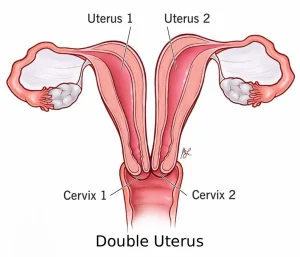
Double uterus, also known as uterus didelphys, is a rare congenital condition in which a female is born with two separate uterine cavities instead of one. This occurs due to incomplete fusion of the Müllerian ducts during fetal development. In some cases, a person may also have two cervices and, less commonly, a divided or double vagina. Many individuals with a double uterus may not experience symptoms and may only discover the condition during routine gynecological exams or imaging studies.
Symptoms
Symptoms of a double uterus can vary widely, and some people may have no noticeable signs. When symptoms occur, they may include:
-
Heavy or irregular menstrual bleeding
-
Painful menstrual periods
-
Pelvic pain or discomfort
-
Pain during sexual intercourse
-
Difficulty using tampons
-
Recurrent pregnancy loss or preterm labor in some cases
The severity of symptoms often depends on whether there are associated structural differences in the cervix or vagina.
Causes
Double uterus is a congenital condition, meaning it develops before birth. It results from abnormal development of the reproductive tract during early fetal growth. Normally, two Müllerian ducts fuse to form a single uterus. When this fusion does not occur properly, two separate uterine structures may form. The exact reason for this developmental variation is not fully understood, but it is not caused by lifestyle factors or actions taken during pregnancy.
Risk Factors
There are no well-established preventable risk factors for developing a double uterus, as it forms during fetal development. However, certain factors may be associated:
-
Family history of Müllerian duct anomalies
-
Presence of other congenital abnormalities, particularly of the kidneys or urinary tract
-
Diagnosis of other reproductive tract structural differences
Most individuals are unaware of the condition until adolescence or adulthood.
Complications
While many people with a double uterus can have normal pregnancies, the condition may increase the risk of certain complications:
-
Infertility in some cases
-
Recurrent miscarriages
-
Preterm birth
-
Breech or abnormal fetal position
-
Need for cesarean delivery
-
Menstrual blood obstruction if vaginal anomalies are present
Regular medical follow-up is important for monitoring reproductive health and pregnancy outcomes.
Prevention
Because a double uterus is a congenital condition, it cannot be prevented. However, early diagnosis and appropriate medical care can help reduce the risk of complications. Preventive measures focus on management rather than avoidance and may include:
-
Routine gynecological checkups
-
Imaging studies if symptoms or reproductive concerns arise
-
Preconception counseling for those planning pregnancy
-
Close monitoring during pregnancy to identify and manage risks early
With proper medical care, many individuals with a double uterus can lead healthy lives and have successful pregnancies.
Request an appointment
Advertisement
