
Overview
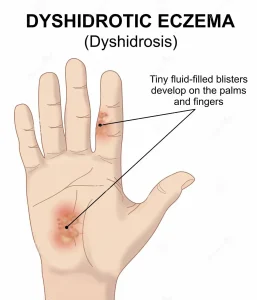
Dyshidrosis, also known as dyshidrotic eczema, is a skin condition characterized by the sudden appearance of small, fluid-filled blisters on the palms of the hands, sides of the fingers, and soles of the feet. The condition is often recurrent and can cause significant discomfort. It commonly worsens during warm weather or periods of stress.
Symptoms
Symptoms of dyshidrosis may range from mild to severe:
-
Small, deep-seated blisters on hands or feet
-
Intense itching or burning sensation
-
Redness and inflammation of the skin
-
Pain or tenderness in affected areas
-
Dry, cracked, or peeling skin as blisters heal
-
Thickened skin with repeated episodes
-
Increased sensitivity to touch
Causes
The exact cause of dyshidrosis is not fully understood, but several factors are linked to its development:
-
Overactive sweat glands
-
Allergic reactions, including metal allergies
-
Emotional stress
-
Hot and humid weather
-
Atopic dermatitis or eczema history
-
Exposure to irritants such as soaps or chemicals
-
Fungal infections of the feet
Risk Factors
Certain factors may increase the risk of dyshidrosis:
-
Personal or family history of eczema
-
Allergies or asthma
-
Excessive sweating
-
High stress levels
-
Occupational exposure to irritants
-
Living in warm or humid climates
Complications
If not properly managed, dyshidrosis can lead to:
-
Secondary bacterial infections
-
Painful skin cracks
-
Chronic eczema changes
-
Difficulty using hands or walking comfortably
-
Scarring in severe or prolonged cases
-
Reduced quality of life due to persistent symptoms
Prevention
Although dyshidrosis cannot always be prevented, flare-ups may be reduced with proper care:
-
Avoiding known skin irritants
-
Keeping hands and feet dry
-
Using gentle, fragrance-free skin products
-
Managing stress effectively
-
Wearing protective gloves when handling chemicals
-
Moisturizing regularly to maintain skin barrier
-
Treating fungal infections promptly
Request an appointment
Advertisement
