
Overview
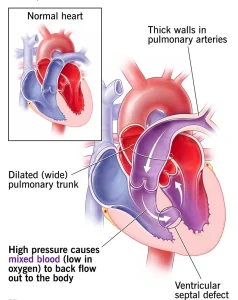
Eisenmenger syndrome is a serious and progressive condition that develops as a complication of certain congenital heart defects present from birth. It occurs when a long-standing abnormal blood flow between the heart chambers or major blood vessels leads to high blood pressure in the lungs. Over time, this increased pressure causes the direction of blood flow to reverse, allowing oxygen-poor blood to circulate through the body and resulting in chronic low oxygen levels.
Symptoms
Symptoms of Eisenmenger syndrome often develop gradually and may worsen over time. Common symptoms include:
-
Shortness of breath, especially during physical activity
-
Fatigue and reduced exercise tolerance
-
Bluish discoloration of the lips, fingers, or toes
-
Dizziness or fainting spells
-
Chest pain
-
Heart palpitations or irregular heartbeat
-
Swelling of the legs, ankles, or abdomen
-
Clubbing of fingers and toes
Causes
Eisenmenger syndrome is caused by untreated or uncorrected congenital heart defects that allow abnormal blood flow between the left and right sides of the heart. Over time, increased blood flow to the lungs damages the pulmonary blood vessels, leading to pulmonary hypertension and reversal of blood flow through the defect.
Risk Factors
Factors that increase the risk of developing Eisenmenger syndrome include:
-
Congenital heart defects that are not repaired early in life
-
Large defects that cause significant left-to-right blood flow
-
Delayed diagnosis or lack of access to appropriate cardiac care
Complications
Eisenmenger syndrome can lead to multiple serious and life-threatening complications, including:
-
Severe pulmonary hypertension
-
Heart failure
-
Abnormal heart rhythms
-
Stroke or brain abscess
-
Bleeding disorders
-
Gout due to elevated uric acid levels
-
Increased risk of sudden cardiac death
Prevention
Eisenmenger syndrome is largely preventable with early detection and treatment of congenital heart defects. Preventive strategies include:
-
Early diagnosis of congenital heart defects in infancy or childhood
-
Timely surgical or catheter-based repair of heart defects
-
Regular follow-up with a cardiologist
-
Avoiding high-altitude environments and activities that lower oxygen levels
-
Managing infections and other health conditions promptly
Early and appropriate management of congenital heart disease is key to preventing the development of Eisenmenger syndrome and improving long-term outcomes.
Advertisement
