
Overview
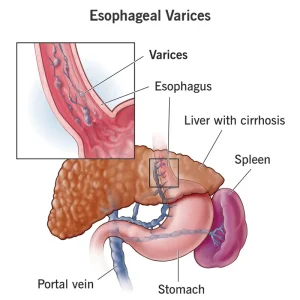
Esophageal varices are enlarged, swollen veins in the lower part of the esophagus. They develop when normal blood flow to the liver is blocked, most often due to chronic liver disease, causing blood to be redirected into smaller veins that are not designed to handle high pressure. These veins can become fragile and prone to bleeding, making esophageal varices a serious and potentially life-threatening condition.
Symptoms
Many people with esophageal varices do not have symptoms until bleeding occurs. When symptoms are present, they may include:
-
Vomiting blood
-
Black, tarry stools
-
Lightheadedness or dizziness
-
Rapid heartbeat
-
Shortness of breath
-
Pale skin due to blood loss
-
Fainting in severe cases
Bleeding from esophageal varices is a medical emergency and requires immediate care.
Causes
Esophageal varices develop primarily due to increased pressure in the portal vein system. Common causes include:
-
Liver cirrhosis from chronic liver disease
-
Chronic hepatitis infections
-
Alcohol-related liver damage
-
Portal vein thrombosis
-
Certain parasitic infections affecting the liver
Increased pressure forces blood into smaller veins, causing them to enlarge.
Risk Factors
Several factors increase the risk of developing esophageal varices and bleeding:
-
Advanced liver disease or cirrhosis
-
High portal vein pressure
-
Continued alcohol consumption
-
Large varices detected on endoscopy
-
Poor liver function
The severity of liver disease strongly influences risk.
Complications
Esophageal varices can lead to serious complications:
-
Massive internal bleeding
-
Shock due to blood loss
-
Worsening liver failure
-
Increased risk of infection
-
High risk of recurrent bleeding
Without prompt treatment, complications can be fatal.
Prevention
While esophageal varices themselves may not be completely preventable, the risk of bleeding can be reduced:
-
Managing chronic liver disease under medical supervision
-
Avoiding alcohol completely in liver disease
-
Using prescribed medications to reduce portal pressure
-
Regular screening endoscopy in people with cirrhosis
-
Seeking immediate care for signs of gastrointestinal bleeding
Early detection and careful management are critical in preventing life-threatening complications from esophageal varices.
Advertisement
