
Overview
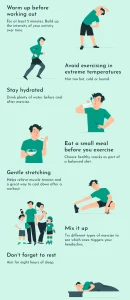
Exercise headaches are headaches triggered by physical activity, particularly strenuous or intense exercise. They can occur during or after activities such as running, weightlifting, cycling, or sexual activity. Exercise headaches are usually benign and short-lived, but in some cases they may signal an underlying medical condition. They are classified as primary exercise headaches when no other cause is found.
Symptoms
Symptoms of exercise headaches typically begin during or shortly after physical exertion. Common symptoms include:
-
Throbbing or pulsating pain on both sides of the head
-
Headache that starts suddenly during exercise
-
Pain lasting from a few minutes to several hours
-
Worsening pain with continued physical activity
-
Nausea in some cases
-
Sensitivity to light or sound occasionally
Severe or unusual headaches should be evaluated to rule out serious causes.
Causes
The exact cause of primary exercise headaches is not fully understood. They are believed to occur due to increased blood flow and pressure in the blood vessels of the brain during strenuous activity. Potential contributing factors include:
-
Sudden increases in physical intensity
-
Exercising in hot or humid conditions
-
High-altitude environments
-
Dehydration
-
Poor breathing technique during exertion
Secondary exercise headaches may be caused by underlying brain or blood vessel conditions.
Risk Factors
Several factors may increase the likelihood of developing exercise headaches:
-
High-intensity or prolonged physical activity
-
Exercising without proper warm-up
-
Hot weather or inadequate hydration
-
Personal or family history of migraines
-
Sudden changes in exercise routine
Awareness of triggers can help reduce occurrence.
Complications
Exercise headaches are usually not dangerous, but complications may occur if an underlying cause is present:
-
Recurring headaches that limit physical activity
-
Reduced exercise tolerance
-
Missed diagnosis of serious conditions such as brain aneurysm or bleeding in rare cases
-
Anxiety related to fear of exercising
Medical evaluation is important if headaches are severe, sudden, or persistent.
Prevention
Exercise headaches can often be prevented with simple measures:
-
Gradually increasing exercise intensity
-
Performing proper warm-up and cool-down routines
-
Staying well hydrated before and after exercise
-
Avoiding strenuous workouts in extreme heat
-
Maintaining regular breathing patterns during activity
-
Seeking medical advice for recurrent or severe headaches
Proper exercise habits and early evaluation help minimize the impact of exercise headaches and support safe physical activity.
Advertisement
