
Overview
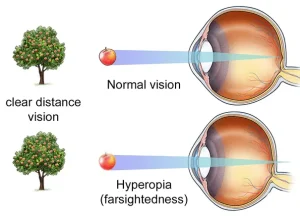
Farsightedness, also known as hyperopia, is a common vision condition in which distant objects are seen more clearly than nearby objects. It occurs when light entering the eye is focused behind the retina instead of directly on it, making close-up tasks such as reading or using digital devices difficult.
Farsightedness may be present at birth or develop later in life. Mild cases may cause no noticeable symptoms, especially in younger individuals, while moderate to severe cases can affect both near and distant vision.
Symptoms
Symptoms of farsightedness vary depending on severity and age. Common symptoms include:
-
Difficulty focusing on close objects
-
Eye strain after reading or screen use
-
Headaches, especially after prolonged near work
-
Blurred vision at close range
-
Squinting to see clearly
-
Eye fatigue or discomfort
Children may not complain of vision problems but may show signs such as avoiding reading or having trouble concentrating.
Causes
Farsightedness occurs when the eyeball is too short or the cornea has too little curvature. These structural differences prevent light from focusing properly on the retina.
Genetic factors play a major role, and farsightedness often runs in families. Age-related changes in the eye can also contribute, especially as the eye’s focusing ability decreases over time.
Risk Factors
Several factors increase the likelihood of developing farsightedness, including:
-
Family history of hyperopia
-
Certain eye diseases or injuries
-
Age-related changes in eye structure
-
Premature birth or low birth weight
These factors may influence eye development and focusing ability.
Complications
If left uncorrected, farsightedness can lead to complications such as:
-
Chronic eye strain and discomfort
-
Frequent headaches
-
Learning difficulties in children
-
Crossed eyes or lazy eye in severe childhood cases
-
Reduced quality of life due to visual discomfort
Early detection and correction help prevent long-term visual problems.
Prevention
Farsightedness cannot always be prevented, but good eye care can reduce its impact and help detect problems early:
-
Regular comprehensive eye examinations
-
Using appropriate corrective lenses as prescribed
-
Taking breaks during prolonged near work
-
Ensuring adequate lighting when reading or working
-
Encouraging routine eye checkups for children
Timely diagnosis and proper vision correction can significantly improve visual comfort and daily functioning for individuals with farsightedness.
Request an appointment
Advertisement
