
Overview
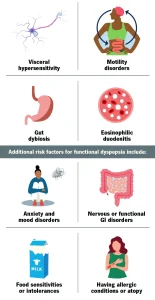
Functional dyspepsia is a chronic disorder of the upper digestive tract characterized by recurring indigestion symptoms without an identifiable structural or biochemical cause. It affects how the stomach and upper intestines function, leading to discomfort even though routine tests may appear normal. Functional dyspepsia is common and can significantly impact quality of life, but it does not cause permanent damage to the digestive system.
Symptoms
Symptoms of functional dyspepsia may vary in severity and frequency:
-
Upper abdominal pain or burning
-
Feeling uncomfortably full after eating
-
Early satiety, feeling full quickly
-
Bloating or abdominal distension
-
Nausea
-
Belching
Symptoms may worsen after meals or during periods of stress.
Causes
The exact cause of functional dyspepsia is not fully understood. It is thought to involve abnormal stomach motility, heightened sensitivity to stomach stretching, and altered communication between the gut and brain. Contributing factors may include:
-
Delayed stomach emptying
-
Increased sensitivity of stomach nerves
-
Helicobacter pylori infection in some cases
-
Psychological stress or anxiety
These factors can disrupt normal digestive function.
Risk Factors
Factors that increase the likelihood of developing functional dyspepsia include:
-
Chronic stress or anxiety
-
History of gastrointestinal infections
-
Use of certain medications such as nonsteroidal anti-inflammatory drugs
-
Female sex
Lifestyle and psychological factors play an important role.
Complications
Functional dyspepsia does not cause serious physical complications, but it can lead to:
-
Reduced quality of life
-
Poor appetite or unintentional weight loss
-
Anxiety or depression related to chronic symptoms
-
Frequent healthcare visits
Managing symptoms effectively helps minimize these impacts.
Prevention
Functional dyspepsia cannot always be prevented, but symptom flare-ups may be reduced:
-
Eating smaller, more frequent meals
-
Avoiding foods that trigger symptoms
-
Limiting caffeine and alcohol intake
-
Managing stress through relaxation techniques
-
Maintaining regular sleep and eating patterns
Early evaluation and individualized management can help control symptoms and improve daily functioning.
Advertisement
