
Overview
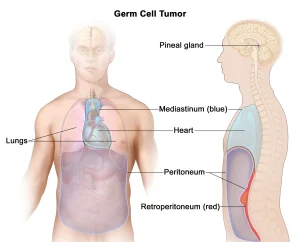
Germ cell tumors are a group of tumors that develop from germ cells, which are the cells responsible for forming sperm in males and eggs in females. These tumors most commonly occur in the testes or ovaries but can also develop in other parts of the body, such as the chest, abdomen, or brain. Germ cell tumors may be benign or malignant, and many types respond well to treatment when detected early.
Symptoms
Symptoms of germ cell tumors depend on the tumor’s location, size, and whether it is benign or cancerous. Common symptoms include:
-
A painless lump or swelling in the testicle or ovary
-
Abdominal pain or swelling
-
Pelvic discomfort
-
Feeling of heaviness in the lower abdomen
-
Breast tenderness or enlargement in males due to hormonal effects
-
Fatigue or unexplained weight loss in advanced cases
Tumors located outside the reproductive organs may cause symptoms related to pressure on nearby structures.
Causes
The exact cause of germ cell tumors is not fully understood. They occur when germ cells grow abnormally and form a mass. Possible contributing factors include:
-
Errors in cell development during early life
-
Abnormal migration of germ cells before birth
-
Genetic changes that affect cell growth
In many cases, no clear cause can be identified.
Risk Factors
Several factors may increase the risk of developing germ cell tumors, including:
-
Undescended testicles in males
-
Family history of germ cell tumors
-
Genetic conditions affecting sexual development
-
Young age, particularly adolescence and early adulthood
-
Male sex for testicular germ cell tumors
Germ cell tumors can occur at any age but are more common in younger individuals.
Complications
Complications of germ cell tumors depend on tumor type, location, and stage. Possible complications include:
-
Spread of cancer to other organs
-
Hormonal imbalances affecting puberty or fertility
-
Infertility related to tumor growth or treatment
-
Pressure on nearby organs causing pain or dysfunction
-
Recurrence after treatment
Early diagnosis improves treatment outcomes and reduces complication risks.
Prevention
There is no guaranteed way to prevent germ cell tumors, as many risk factors are not controllable. However, certain steps may support early detection and better outcomes:
-
Regular self-examination of the testicles in males
-
Seeking medical evaluation for unexplained lumps or swelling
-
Routine health checkups for individuals with known risk factors
-
Genetic counseling for families with a history of related tumors
Early recognition and prompt medical care play an important role in successful management of germ cell tumors.
Advertisement
