
Overview
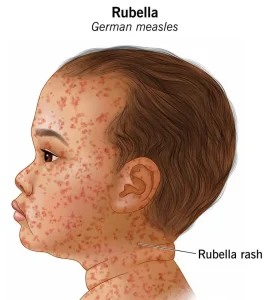
Rubella, also known as German measles, is a contagious viral infection caused by the rubella virus. It is generally a mild illness in children and adults but can have serious consequences if it occurs during pregnancy. Rubella is best known for its characteristic rash and its potential to cause congenital rubella syndrome when a pregnant woman becomes infected.
Symptoms of Rubella
Symptoms usually appear two to three weeks after exposure and are often mild, especially in children.
-
Low-grade fever
-
Rash that starts on the face and spreads to the rest of the body
-
Swollen lymph nodes, especially behind the ears and in the neck
-
Headache
-
Runny nose or mild cough
-
Joint pain or stiffness, more common in adults
-
Red or irritated eyes
Causes of Rubella
Rubella is caused by infection with the rubella virus.
Key aspects include:
-
Spread through respiratory droplets when an infected person coughs or sneezes
-
High contagiousness in unvaccinated populations
-
Ability to spread before the rash appears
The virus can cross the placenta and infect a developing fetus.
Risk Factors for Rubella
Certain factors increase the risk of rubella infection.
-
Lack of vaccination against rubella
-
Close contact with infected individuals
-
Travel to areas with low vaccination coverage
-
Pregnancy, due to risk to the fetus
Complications of Rubella
While rubella is usually mild, complications can occur, particularly in adults and unborn babies.
-
Arthritis or joint inflammation
-
Encephalitis, in rare cases
-
Bleeding disorders
-
Congenital rubella syndrome in infants, leading to heart defects, hearing loss, or vision problems
-
Miscarriage or stillbirth when infection occurs during pregnancy
Prevention of Rubella
Rubella is highly preventable through vaccination and public health measures.
-
Routine vaccination with the measles, mumps, and rubella vaccine
-
Ensuring immunity before pregnancy
-
Avoiding contact with infected individuals during outbreaks
-
Maintaining high community vaccination coverage
Vaccination remains the most effective way to prevent rubella and protect both individuals and unborn babies from its serious complications.
Advertisement
