
Overview
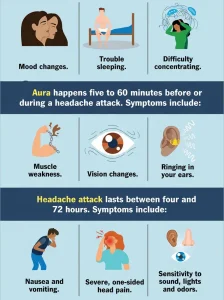
Migraine is a neurological condition characterized by recurring episodes of moderate to severe headache, often accompanied by other symptoms such as nausea and sensitivity to light or sound. Migraine headaches typically affect one side of the head and can last from a few hours to several days.
Migraine is more than just a headache. It is a complex disorder involving changes in brain activity and nerve signaling. The condition can significantly interfere with daily life, work, and social activities, especially when attacks are frequent or severe.
Symptoms
Migraine symptoms vary from person to person and may change over time. Some individuals experience warning signs before the headache begins.
Common symptoms include:
-
Throbbing or pulsating headache pain
-
Pain usually on one side of the head
-
Nausea or vomiting
-
Sensitivity to light, sound, or smells
-
Blurred vision
-
Dizziness or lightheadedness
-
Fatigue
-
Neck stiffness
Some people experience an aura before or during a migraine, which may include visual disturbances, tingling sensations, or difficulty speaking.
Causes
The exact cause of migraine is not fully understood. It is believed to involve abnormal brain activity that affects nerve signals, blood vessels, and chemical messengers in the brain.
Contributing factors may include:
-
Changes in brain chemicals such as serotonin
-
Genetic predisposition
-
Abnormal pain signal processing in the brain
-
Activation of sensory nerves supplying blood vessels in the head
Migraine attacks are often triggered by specific internal or external factors rather than a single cause.
Risk Factors
Certain factors increase the likelihood of developing migraine or experiencing frequent attacks.
Key risk factors include:
-
Family history of migraine
-
Female sex
-
Hormonal changes, especially during menstruation or pregnancy
-
Chronic stress
-
Irregular sleep patterns
-
Skipping meals or dehydration
-
Certain foods or beverages
-
Sensory overstimulation
Migraine can begin at any age but often starts during adolescence or early adulthood.
Complications
Frequent or severe migraines can lead to complications that affect physical and emotional well-being.
Possible complications include:
-
Chronic migraine with headaches on many days each month
-
Medication overuse headaches from frequent pain reliever use
-
Anxiety or depression related to recurring attacks
-
Reduced productivity and missed work or school
-
Sleep disturbances
Proper management can help reduce the risk of long-term complications.
Prevention
While migraines cannot always be prevented, many people can reduce the frequency and severity of attacks by managing triggers and lifestyle factors.
Preventive strategies include:
-
Maintaining regular sleep and meal schedules
-
Managing stress through relaxation techniques
-
Staying well hydrated
-
Limiting caffeine and alcohol intake
-
Identifying and avoiding personal migraine triggers
-
Engaging in regular physical activity
-
Following prescribed preventive medications when recommended
Consistent lifestyle habits and early intervention at the onset of symptoms play an important role in migraine prevention and control.
Request an appointment
Advertisement
