
Overview
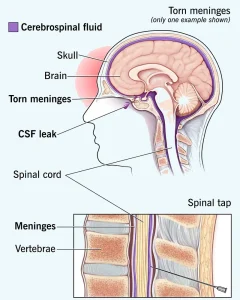
Spinal headaches, also known as post-dural puncture headaches, occur when cerebrospinal fluid leaks from the area surrounding the spinal cord after a spinal procedure. This fluid loss lowers pressure around the brain and spinal cord, leading to a characteristic headache. Spinal headaches commonly develop after spinal anesthesia, lumbar puncture, or epidural injections and usually appear within a few days of the procedure.
Symptoms
Symptoms typically worsen when sitting or standing and improve when lying down. Common symptoms include:
-
Dull or throbbing headache, often at the front or back of the head
-
Headache that improves when lying flat
-
Neck stiffness or pain
-
Nausea or vomiting
-
Dizziness or lightheadedness
-
Sensitivity to light or sound
-
Ringing in the ears or hearing changes
In most cases, symptoms resolve on their own, but some headaches can persist if untreated.
Causes
Spinal headaches are caused by a leak of cerebrospinal fluid through a small hole in the protective covering of the spinal cord. This hole is usually created during medical procedures involving needles in the spine. The resulting drop in fluid pressure leads to stretching of pain-sensitive structures in the brain, triggering headache symptoms.
Risk Factors
Factors that may increase the risk of developing a spinal headache include:
-
Spinal or epidural anesthesia
-
Diagnostic lumbar puncture
-
Use of larger spinal needles
-
Younger age
-
Female sex
-
Pregnancy
-
Low body weight
Not everyone undergoing spinal procedures develops a spinal headache.
Complications
Most spinal headaches are temporary, but prolonged or severe cases may lead to complications such as:
-
Chronic headache
-
Difficulty performing daily activities
-
Dehydration due to nausea or vomiting
-
Rarely, bleeding or infection related to ongoing fluid leakage
Prompt treatment helps prevent prolonged discomfort and complications.
Prevention
While spinal headaches cannot always be prevented, certain measures can reduce the risk:
-
Using smaller, specialized needles during spinal procedures
-
Proper patient positioning during and after procedures
-
Following post-procedure instructions, including adequate rest
-
Seeking early medical care if headache symptoms develop
Timely recognition and management improve recovery and reduce the chance of persistent symptoms.
Advertisement
