
Overview
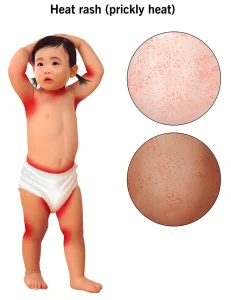
Heat rash, also known as prickly heat or miliaria, is a skin condition that develops when sweat becomes trapped in blocked sweat ducts. This commonly occurs in hot, humid environments and affects people of all ages, especially infants and those who sweat heavily. Heat rash usually appears as small red bumps or blisters and is generally harmless, resolving once the skin cools.
Symptoms
Symptoms of heat rash vary depending on the type and severity. Common signs include:
-
Small red or clear bumps on the skin
-
Itching or prickling sensation
-
Mild swelling or skin irritation
-
Warm or tender skin in the affected area
Heat rash often appears in skin folds or areas where clothing causes friction, such as the neck, chest, back, or underarms.
Causes
Heat rash is caused by blocked sweat ducts that prevent sweat from reaching the skin surface. This blockage leads to inflammation and irritation. Excessive sweating, hot and humid weather, tight clothing, prolonged bed rest, and heavy creams or ointments that block pores can all contribute to the development of heat rash.
Risk Factors
Several factors increase the risk of heat rash. These include hot and humid climates, excessive sweating, wearing tight or non-breathable clothing, and limited air circulation around the skin. Infants are at higher risk because their sweat ducts are not fully developed. Adults who are bedridden or physically active in hot conditions are also more prone to heat rash.
Complications
Heat rash is usually mild and resolves on its own, but complications can occur if the skin becomes infected from scratching. In rare cases, severe or repeated episodes may lead to deeper skin inflammation or discomfort that interferes with daily activities.
Prevention
Preventing heat rash focuses on keeping the skin cool and dry. Helpful measures include wearing loose, breathable clothing, avoiding excessive heat and humidity, taking cool showers, and using fans or air conditioning when possible. Keeping the skin clean and dry and avoiding heavy, pore-clogging products can also reduce the risk of heat rash.
Request an appointment
Advertisement
