
Overview
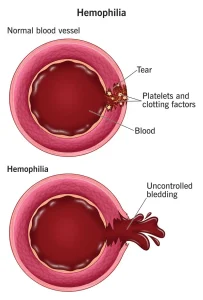
Hemophilia is a rare inherited bleeding disorder in which the blood does not clot properly. People with hemophilia have low levels or a complete absence of certain clotting proteins, called clotting factors, that help stop bleeding. As a result, bleeding may last longer than normal after an injury, surgery or dental procedure.
Hemophilia mainly affects males, while females are usually carriers of the condition. The severity of hemophilia depends on how much clotting factor is present in the blood. Severe hemophilia can cause spontaneous bleeding without an obvious injury, particularly into joints and muscles.
With proper treatment and regular medical care, most people with hemophilia can live active and productive lives. Advances in clotting factor replacement therapy have significantly improved outcomes and reduced complications.
Symptoms
Symptoms of hemophilia vary depending on the severity of the condition. Mild cases may cause symptoms only after surgery or injury, while severe cases may cause frequent spontaneous bleeding.
Common symptoms may include:
-
Excessive bleeding from cuts or injuries
-
Prolonged bleeding after surgery or dental work
-
Easy bruising
-
Frequent nosebleeds that are hard to stop
-
Bleeding into joints, causing pain, swelling and stiffness
-
Bleeding into muscles, leading to deep pain and swelling
-
Blood in urine or stool
In infants, symptoms may include excessive bleeding after circumcision or unexplained irritability caused by internal bleeding.
Causes
Hemophilia is caused by a genetic mutation that affects the production of clotting factors. The most common forms are hemophilia A, caused by a deficiency of clotting factor VIII, and hemophilia B, caused by a deficiency of clotting factor IX.
The condition is usually inherited through the X chromosome. In rare cases, hemophilia can develop later in life due to the immune system producing antibodies that attack clotting factors. This is known as acquired hemophilia.
Risk factors
Factors that increase the risk of hemophilia include:
-
Family history of hemophilia
-
Being male
-
Genetic mutations affecting clotting factor genes
-
Autoimmune conditions associated with acquired hemophilia
Complications
Possible complications of hemophilia include:
-
Chronic joint damage due to repeated bleeding
-
Muscle damage
-
Life-threatening internal bleeding
-
Development of inhibitors that reduce the effectiveness of clotting factor treatments
-
Increased risk of bleeding during surgery or trauma
Early diagnosis and consistent treatment help reduce the risk of long-term complications.
Prevention
There is no way to prevent inherited hemophilia. However, complications can be minimized through regular clotting factor therapy, avoiding activities with high risk of injury, maintaining joint health and receiving care from specialized hemophilia treatment centers.
Genetic counseling may help families understand the risk of passing hemophilia to future generations.
Advertisement
