
Overview
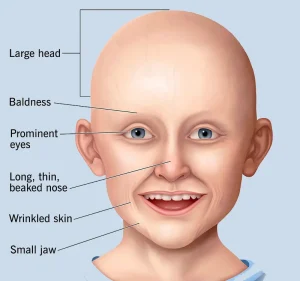
Progeria is a rare genetic disorder that causes children to age rapidly, beginning in early childhood. The condition is also known as Hutchinson-Gilford progeria syndrome. Children with progeria appear healthy at birth, but within the first few years of life they begin to show signs of accelerated aging.
The disorder affects many parts of the body and leads to features commonly associated with aging, such as hair loss, skin changes, joint stiffness, and cardiovascular problems. Despite these physical changes, most children with progeria have normal intelligence and cognitive development.
Progeria is extremely rare and occurs due to a genetic mutation that affects the structure and stability of cells. The condition progresses over time and often leads to serious heart and blood vessel problems.
Symptoms
Symptoms of progeria usually begin to appear during the first two years of life and become more noticeable as the child grows.
Common symptoms include:
-
Slow growth and short stature
-
Hair loss, including scalp hair, eyebrows, and eyelashes
-
Thin or fragile skin with visible veins
-
Narrow face with a small jaw and thin lips
-
Large head compared to body size
-
Stiff joints and limited movement
-
Loss of body fat and muscle
Children with progeria may also develop features associated with aging, such as joint problems and bone abnormalities.
Causes
Progeria is caused by a mutation in the LMNA gene, which provides instructions for making a protein called lamin A. This protein helps maintain the structure of the cell nucleus. When the gene is altered, an abnormal form of lamin A is produced.
This abnormal protein, often called progerin, disrupts the normal function of cells and causes them to age prematurely. The genetic mutation usually occurs randomly and is not typically inherited from the parents.
Because the mutation affects how cells function and repair themselves, tissues throughout the body gradually become damaged over time.
Risk factors
Progeria is extremely rare, and there are very few known risk factors.
Possible factors include:
-
Spontaneous genetic mutation during early development
-
Very rare cases with a family history of genetic disorders
The condition affects both boys and girls and occurs in different populations worldwide.
Complications
Progeria can lead to serious health problems as the disease progresses, particularly affecting the heart and blood vessels.
Possible complications include:
-
Hardening and narrowing of the arteries
-
Heart disease
-
Stroke
-
Joint stiffness and bone abnormalities
-
Dental problems and delayed tooth development
Cardiovascular complications are the most common cause of serious health issues in children with this condition.
Prevention
Progeria cannot be prevented because it results from a spontaneous genetic mutation that occurs early in development. However, early diagnosis and specialized medical care can help manage symptoms and improve quality of life.
-
Regular monitoring of heart and blood vessel health
-
Physical therapy to maintain joint mobility
-
Balanced nutrition to support growth and strength
-
Regular medical checkups with specialists
-
Genetic counseling for families seeking information about the condition
Although there is no cure, advances in medical research and supportive care have helped improve the outlook and quality of life for children with progeria.
Advertisement
