
Overview
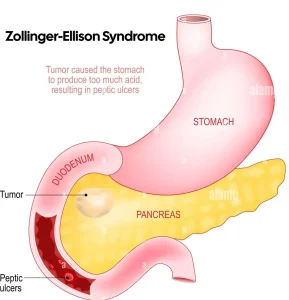
Zollinger-Ellison syndrome is a rare condition in which one or more tumors form in the pancreas or the upper part of the small intestine, called the duodenum. These tumors, known as gastrinomas, produce large amounts of the hormone gastrin. Excess gastrin causes the stomach to make too much acid, leading to peptic ulcers, diarrhea and abdominal pain.
Zollinger-Ellison syndrome can occur at any age, but it is most often diagnosed between ages 20 and 50. The tumors are usually slow-growing, but some may become cancerous and spread to other parts of the body. Treatment focuses on controlling stomach acid and managing or removing the tumors.
Symptoms
Symptoms of Zollinger-Ellison syndrome are often related to excess stomach acid and ulcer formation. Symptoms may be ongoing and may not respond well to standard ulcer treatments.
Common symptoms include:
-
Burning, aching or gnawing pain in the abdomen
-
Diarrhea, which may be chronic
-
Acid reflux and heartburn
-
Nausea and vomiting
-
Bloating and burping
Other symptoms may include:
-
Unintended weight loss
-
Loss of appetite
-
Black or bloody stools, which may indicate bleeding ulcers
-
Fatigue related to anemia from chronic bleeding
Symptoms can vary depending on the number, size and location of the tumors.
Causes
Zollinger-Ellison syndrome is caused by tumors called gastrinomas that secrete excessive amounts of gastrin. Gastrin stimulates the stomach to produce acid for digestion. When gastrin levels are too high, acid production increases beyond normal levels.
The excess acid can damage the lining of the stomach and small intestine, leading to ulcers and inflammation. Most gastrinomas occur in the pancreas or duodenum, but they may also be found in nearby lymph nodes.
In some cases, Zollinger-Ellison syndrome is associated with a genetic condition called multiple endocrine neoplasia type 1, also known as MEN 1.
Risk factors
Factors that may increase the risk of Zollinger-Ellison syndrome include:
-
A family history of multiple endocrine neoplasia type 1
-
Having MEN 1, which increases the likelihood of developing gastrin-producing tumors
-
Middle adulthood, although the condition can occur at any age
Most cases occur sporadically, meaning they develop without a known inherited cause.
Complications
If not treated properly, Zollinger-Ellison syndrome can lead to serious complications due to ongoing acid damage and tumor growth.
Possible complications include:
-
Severe or recurrent peptic ulcers
-
Gastrointestinal bleeding
-
Narrowing of the digestive tract due to scarring
-
Spread of gastrinomas to the liver or lymph nodes
-
Chronic diarrhea leading to dehydration and nutrient deficiencies
Early diagnosis and proper treatment can reduce the risk of these complications.
Prevention
There is no known way to prevent Zollinger-Ellison syndrome. However, early detection and management can help prevent complications and improve quality of life.
Preventive measures focus on:
-
Prompt evaluation of persistent or severe ulcer symptoms
-
Regular monitoring for people with MEN 1
-
Managing stomach acid levels to prevent ulcer-related damage
-
Ongoing follow-up care to monitor tumor growth and spread
People with a family history of MEN 1 may benefit from genetic counseling and regular medical screening.
Advertisement
