
Overview
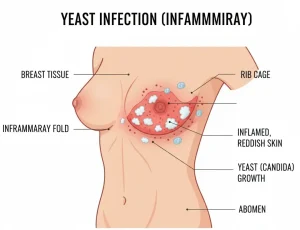
A yeast infection under the breast is a common skin condition caused by an overgrowth of yeast, most often Candida species. This type of infection is also known as intertrigo with secondary yeast involvement. It develops in warm, moist areas where skin folds rub together, creating an ideal environment for yeast to grow.
The area beneath the breasts can easily trap sweat and heat, especially in hot climates or during physical activity. While the condition is not usually serious, it can be uncomfortable and may worsen without proper care and treatment.
Symptoms
Symptoms of a yeast infection under the breast may range from mild to severe and often include:
-
Red, inflamed rash beneath the breast
-
Persistent itching or burning sensation
-
Pain or tenderness in the affected area
-
Skin that appears shiny, moist, or cracked
-
White or yellowish residue in skin folds
-
Small red bumps or satellite lesions near the main rash
Symptoms may worsen with sweating, friction, or delayed treatment.
Causes
A yeast infection under the breast occurs when yeast that normally lives on the skin multiplies excessively. Common contributing causes include:
-
Excess moisture from sweating
-
Warm environments that promote fungal growth
-
Friction between skin surfaces
-
Poor air circulation under the breasts
-
Changes in the body’s natural skin balance
These factors allow yeast to thrive and irritate the skin.
Risk factors
Certain factors can increase the risk of developing a yeast infection under the breast, including:
-
Large breasts that create deeper skin folds
-
Obesity, which increases moisture and friction
-
Hot and humid weather
-
Wearing tight or non-breathable bras or clothing
-
Diabetes, especially if blood sugar is not well controlled
-
Weakened immune system
-
Prolonged use of antibiotics or corticosteroids
Complications
If left untreated, a yeast infection under the breast may lead to complications such as:
-
Chronic or recurrent infections
-
Skin breakdown, cracking, or bleeding
-
Secondary bacterial infections
-
Increased pain and discomfort that interferes with daily activities
Early treatment can help prevent these issues and promote faster healing.
Prevention
Preventive measures can significantly reduce the risk of yeast infections under the breast, including:
-
Keeping the area clean and thoroughly dry
-
Wearing well-fitted, breathable bras made from moisture-wicking materials
-
Changing out of sweaty clothing promptly
-
Using absorbent powders or antifungal powders if recommended
-
Maintaining a healthy weight
-
Managing underlying conditions such as diabetes
Consistent hygiene and moisture control are key to preventing recurrence and maintaining healthy skin under the breasts.
Request an appointment
Advertisement
