
Overview
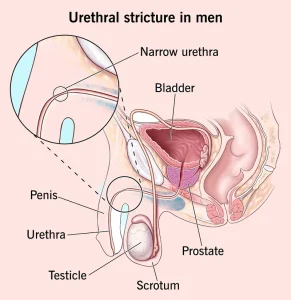
Urethral stricture is a condition in which the urethra becomes narrowed due to scarring, restricting the normal flow of urine from the bladder out of the body. The urethra carries urine through the penis in males and opens just above the vaginal opening in females. This condition is more common in men because their urethra is longer. Urethral strictures can develop gradually or suddenly and may lead to significant urinary problems if left untreated.
Symptoms
Symptoms depend on the severity of the narrowing and may worsen over time.
Common symptoms may include:
-
Weak or reduced urine stream
-
Difficulty starting urination
-
Straining to urinate
-
Frequent urge to urinate
-
Incomplete emptying of the bladder
-
Urinary spraying or split stream
-
Blood in the urine or semen
-
Pain during urination or ejaculation
-
Urinary tract infections
Mild strictures may cause few symptoms initially.
Causes
Urethral stricture is caused by scarring that narrows the urethral passage.
Possible causes include:
-
Injury or trauma to the urethra or pelvis
-
Infections, especially sexually transmitted infections
-
Previous urinary catheter use
-
Surgery involving the prostate or urethra
-
Inflammation of the urethra
-
Congenital narrowing present from birth
Risk Factors
Certain factors increase the likelihood of developing a urethral stricture.
Risk factors include:
-
History of sexually transmitted infections
-
Previous urethral or prostate surgery
-
Long-term or repeated catheter use
-
Pelvic or perineal trauma
-
Chronic urinary tract infections
Complications
Without proper treatment, urethral stricture can lead to serious urinary complications.
Possible complications include:
-
Acute urinary retention
-
Recurrent urinary tract infections
-
Bladder stones
-
Damage to the bladder or kidneys
-
Reduced kidney function
-
Infertility in rare cases
Early diagnosis and management help prevent long-term damage.
Prevention
While not all urethral strictures can be prevented, certain measures may reduce risk.
Preventive steps may include:
-
Practicing safe sex to reduce infection risk
-
Prompt treatment of urinary and sexually transmitted infections
-
Avoiding unnecessary urethral instrumentation
-
Using proper techniques during catheterization
-
Seeking medical care after pelvic or urethral injury
Early evaluation of urinary symptoms allows timely treatment and reduces the risk of complications.
Request an appointment
Advertisement
