
Overview
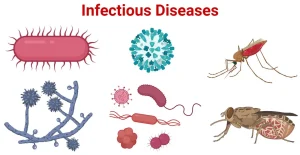
Infectious diseases are illnesses caused by pathogenic microorganisms such as bacteria, viruses, fungi, or parasites. These organisms can invade the body, multiply, and disrupt normal bodily functions. Infectious diseases can spread through direct contact, contaminated food or water, insect bites, respiratory droplets, or contact with infected bodily fluids. They range from mild, self-limiting illnesses to severe, life-threatening conditions.
Symptoms
Symptoms vary widely depending on the type of infection and the body system affected, but common symptoms include:
-
Fever and chills
-
Fatigue or weakness
-
Muscle aches or body pain
-
Cough, sore throat, or difficulty breathing
-
Diarrhea, nausea, or vomiting
-
Skin rashes or sores
-
Headache
-
Swollen lymph nodes
Causes
Infectious diseases are caused by different types of pathogens, including:
-
Bacteria, such as those causing tuberculosis or urinary tract infections
-
Viruses, such as influenza, COVID-19, or hepatitis
-
Fungi, such as those causing ringworm or candidiasis
-
Parasites, such as malaria or giardiasis
Infection occurs when these organisms enter the body and overcome the immune system’s defenses.
Risk factors
-
Weakened immune system due to illness, medications, or aging
-
Poor hygiene or sanitation
-
Close contact with infected individuals
-
Crowded living or working conditions
-
Lack of vaccination
-
Travel to areas with high prevalence of certain infections
-
Poor nutrition
Complications
-
Severe or widespread infection (sepsis)
-
Organ damage or failure
-
Chronic infection or long-term illness
-
Neurological or developmental complications
-
Increased risk of death in vulnerable populations
Prevention
-
Regular handwashing with soap and water
-
Staying up to date with recommended vaccinations
-
Safe food handling and proper cooking
-
Drinking clean, safe water
-
Practicing safe sex
-
Using insect repellent and protective clothing in endemic areas
-
Avoiding close contact with people who are sick
-
Maintaining a strong immune system through proper nutrition, sleep, and exercise
Early diagnosis and appropriate treatment are essential to control infectious diseases, reduce transmission, and prevent serious complications.
Advertisement
