
Overview
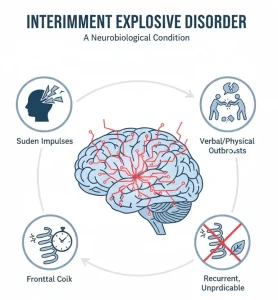
Intermittent explosive disorder (IED) is a mental health condition characterized by recurrent, sudden episodes of impulsive and aggressive behavior that are disproportionate to the situation. These outbursts may involve verbal aggression, physical violence, or destruction of property. The episodes are typically brief but can cause significant distress, relationship problems, and legal or occupational consequences.
Symptoms
-
Repeated episodes of sudden anger or rage
-
Verbal aggression such as shouting or insults
-
Physical aggression toward people, animals, or objects
-
Destruction of property
-
Feeling unable to control angry impulses
-
Rapid escalation of anger followed by relief, guilt, or remorse
-
Outbursts that are out of proportion to the trigger
Causes
The exact cause of intermittent explosive disorder is unknown, but several factors may contribute:
-
Abnormal functioning of brain areas involved in impulse control
-
Imbalances in brain chemicals such as serotonin
-
Genetic predisposition
-
History of childhood trauma, abuse, or exposure to violence
-
Learned behavioral patterns from family or environment
Risk factors
-
Male gender
-
History of aggressive behavior in childhood
-
Family history of mental health or impulse control disorders
-
Exposure to violence or trauma at a young age
-
Coexisting mental health conditions such as depression or anxiety
Complications
-
Relationship difficulties and family conflict
-
Problems at work or school
-
Legal issues or involvement with law enforcement
-
Substance abuse
-
Increased risk of self-harm or suicidal thoughts
-
Emotional distress, guilt, or shame
Prevention
While intermittent explosive disorder cannot always be prevented, early recognition and intervention may reduce severity:
-
Seeking mental health support for anger or impulse control problems
-
Cognitive-behavioral therapy to develop coping and anger management skills
-
Stress management techniques such as mindfulness or relaxation exercises
-
Avoiding alcohol or substances that may worsen impulsivity
-
Adhering to prescribed medications when recommended
With proper treatment, including psychotherapy and, in some cases, medication, individuals with intermittent explosive disorder can learn to manage their anger and improve their quality of life.
Advertisement
