
Overview
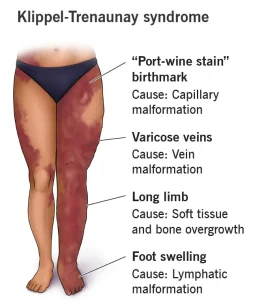
Klippel-Trenaunay syndrome is a rare congenital vascular disorder present at birth. It is characterized by abnormal development of blood vessels, soft tissues, and bones, most commonly affecting one limb. The condition is not inherited and usually occurs due to a genetic change during early fetal development. Symptoms and severity vary widely among individuals.
Symptoms
Symptoms of Klippel-Trenaunay syndrome are usually noticeable at birth or develop in early childhood.
Common symptoms include:
-
Port-wine stain birthmarks on the skin
-
Abnormally large or swollen limb, usually a leg
-
Varicose veins or abnormal vein formation
-
Limb length discrepancy
-
Pain, heaviness, or discomfort in the affected limb
-
Bleeding from abnormal blood vessels
-
Skin thickening or tissue overgrowth
Causes
Klippel-Trenaunay syndrome is caused by abnormal development of blood vessels during early pregnancy.
Key causes include:
-
Genetic mutation affecting vascular and tissue growth
-
Abnormal formation of capillaries, veins, and lymphatic vessels
-
Sporadic mutation occurring before birth
-
Not passed from parents to children
Risk Factors
There are no well-defined risk factors, as Klippel-Trenaunay syndrome occurs randomly.
Possible risk-related factors include:
-
Congenital vascular malformations
-
Abnormal fetal tissue development
Complications
Complications depend on the extent and location of vascular and tissue involvement.
Possible complications include:
-
Chronic pain and swelling
-
Blood clots in deep veins
-
Skin ulcers or infections
-
Bleeding from affected blood vessels
-
Mobility limitations
-
Orthopedic issues due to limb overgrowth
-
Rarely, internal organ involvement
Prevention
There is no known way to prevent Klippel-Trenaunay syndrome. However, early diagnosis and proper management can help reduce complications and improve daily functioning.
Preventive and supportive measures include:
-
Regular monitoring by a multidisciplinary medical team
-
Use of compression garments to reduce swelling
-
Early physical therapy to maintain mobility
-
Prompt treatment of skin infections or ulcers
-
Avoiding prolonged immobility to reduce clot risk
If you want, I can also create diagnosis, management, or prognosis sections in the same SEO-friendly, WordPress-ready format.
Advertisement
