
Overview
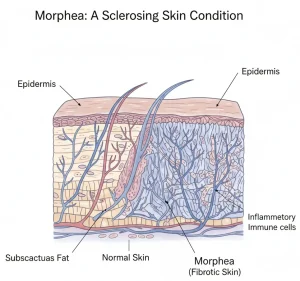
Morphea is a rare autoimmune skin condition characterized by localized areas of skin thickening and hardening caused by excess collagen production. It primarily affects the skin and underlying tissues and does not involve internal organs. Morphea is also known as localized scleroderma and is different from systemic scleroderma, which affects multiple body systems.
The condition can occur at any age but is more common in children and middle-aged adults. Morphea often develops gradually and may improve or stabilize over time, though some cases can leave lasting skin changes.
Symptoms
Symptoms of morphea vary depending on the type, size, and depth of skin involvement. The condition usually begins as patches of discolored skin that slowly become firm.
Common symptoms include:
-
Oval or round patches of thickened skin
-
Skin that appears white, ivory, brown, or purple
-
Tight, shiny, or hardened skin
-
Loss of hair or sweat glands in affected areas
-
Itching or mild pain in early stages
-
Restricted movement if deeper tissues or joints are involved
In children, morphea may affect growth if it involves deeper layers of skin or muscle.
Causes
The exact cause of morphea is unknown. It is believed to result from an abnormal immune response that leads to excessive collagen production in the skin.
Possible contributing factors include:
-
Autoimmune dysfunction
-
Genetic susceptibility
-
Skin injury or trauma
-
Radiation exposure
-
Infections that may trigger immune activation
In many cases, no clear triggering factor can be identified.
Risk Factors
Several factors may increase the risk of developing morphea, although it can occur without any known risk factors.
These include:
-
Female sex
-
Family history of autoimmune diseases
-
Childhood or middle adulthood
-
Previous skin injury or radiation therapy
-
Presence of other autoimmune conditions
Morphea is not contagious and does not spread from person to person.
Complications
While morphea is usually limited to the skin, complications can occur, especially in more severe or long-lasting cases.
Possible complications include:
-
Permanent skin discoloration or scarring
-
Muscle weakness beneath affected skin
-
Joint stiffness or reduced mobility
-
Cosmetic concerns affecting emotional well-being
-
Growth abnormalities in children with deep lesions
Early diagnosis and treatment can help reduce the risk of long-term complications.
Prevention
There is no known way to prevent morphea because its exact cause is unclear. However, certain measures can help manage the condition and limit progression.
Preventive and management strategies include:
-
Early medical evaluation of unexplained skin changes
-
Protecting affected skin from injury
-
Moisturizing regularly to maintain skin health
-
Following prescribed treatments consistently
-
Regular follow-up to monitor disease activity
With appropriate care, many individuals with morphea experience symptom improvement and stabilization over time.
Advertisement
