
Overview
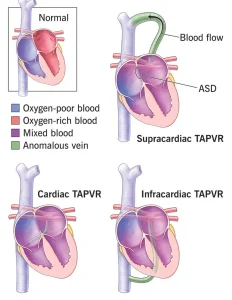
Total anomalous pulmonary venous return, often abbreviated as TAPVR, is a rare congenital heart defect in which the pulmonary veins do not connect normally to the left atrium of the heart. Normally, pulmonary veins carry oxygen rich blood from the lungs to the left side of the heart so it can be pumped to the rest of the body. In TAPVR, these veins connect to other parts of the heart instead of the left atrium.
Because of this abnormal connection, oxygen rich blood mixes with oxygen poor blood before it circulates through the body. As a result, the body may not receive enough oxygen. TAPVR is usually present at birth and often requires surgical treatment soon after diagnosis to correct the abnormal blood flow.
Symptoms
Symptoms of TAPVR usually appear shortly after birth and may vary depending on the severity of the condition and whether blood flow is obstructed.
Common symptoms include:
-
Rapid or difficult breathing
-
Bluish discoloration of the skin, lips, or nails
-
Poor feeding in infants
-
Poor weight gain
-
Extreme fatigue
-
Rapid heartbeat
-
Sweating during feeding
-
Frequent respiratory infections
In severe cases, symptoms may appear immediately after birth and require urgent medical care.
Causes
TAPVR occurs during fetal development when the pulmonary veins fail to connect properly to the left atrium of the heart. Instead, they connect to other veins or chambers of the heart.
The exact reason why this abnormal connection develops is not always known. It is believed to occur due to disruptions in normal heart development during early pregnancy. In some cases, genetic factors or other congenital heart defects may be involved.
Risk factors
Although the exact cause of TAPVR is not always clear, certain factors may increase the risk of congenital heart defects, including TAPVR:
-
Family history of congenital heart disease
-
Genetic abnormalities
-
Maternal infections during pregnancy
-
Exposure to certain medications or harmful substances during pregnancy
-
Poorly controlled diabetes in the mother
-
Smoking or alcohol use during pregnancy
These factors may interfere with normal fetal heart development.
Complications
If TAPVR is not treated promptly, it can lead to serious complications because oxygen rich blood does not circulate properly through the body.
Possible complications include:
-
Severe oxygen deficiency in the body
-
Heart failure
-
Pulmonary hypertension
-
Poor growth and development in infants
-
Recurrent lung infections
-
Life threatening complications in severe cases
Early diagnosis and surgical correction significantly improve survival and long term outcomes.
Prevention
Because TAPVR develops before birth, it cannot always be prevented. However, certain measures may help reduce the risk of congenital heart defects during pregnancy:
-
Receive regular prenatal care
-
Maintain good control of chronic conditions such as diabetes
-
Avoid alcohol, smoking, and harmful substances during pregnancy
-
Take recommended prenatal vitamins including folic acid
-
Avoid exposure to certain infections during pregnancy
-
Discuss medications with a healthcare provider before use during pregnancy
Early prenatal screening and newborn examinations help detect congenital heart conditions quickly so that appropriate treatment can be provided.
Request an appointment
Advertisement
