
Overview
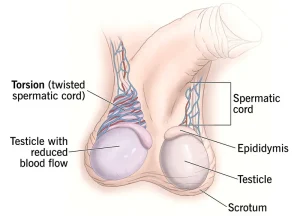
Testicular torsion is a serious medical condition that occurs when the spermatic cord, which supplies blood to the testicle, becomes twisted. This twisting reduces or completely blocks blood flow to the affected testicle. It is considered a medical emergency because the longer the blood supply is cut off, the higher the risk of permanent damage to the testicle.
Testicular torsion can happen suddenly and often causes severe pain. It is most common in teenagers and young males, but it can occur at any age. Immediate medical treatment is necessary, and surgery is usually required to restore blood flow and prevent complications.
Symptoms
Symptoms of testicular torsion usually appear suddenly and may become severe within a short time.
Common symptoms include:
-
Sudden and severe pain in one testicle
-
Swelling of the scrotum
-
Abdominal pain
-
Nausea and vomiting
-
One testicle positioned higher than normal
-
Redness or darkening of the scrotal skin
-
Fever in some cases
-
Frequent urge to urinate
Because the symptoms can worsen quickly, anyone experiencing sudden testicular pain should seek immediate medical attention.
Causes
Testicular torsion occurs when the spermatic cord twists and cuts off the blood supply to the testicle. In many cases, it is related to a structural problem in the scrotum that allows the testicle to rotate freely.
Possible causes or triggers include:
-
A congenital condition known as the bell clapper deformity, which allows the testicle to move more freely
-
Sudden movements or physical activity
-
Injury to the testicles
-
Rapid growth of the testicles during puberty
-
Exposure to cold temperatures
-
Occurrence during sleep without a clear trigger
In many cases, testicular torsion occurs without any obvious cause.
Risk Factors
Certain factors may increase the risk of developing testicular torsion.
Risk factors include:
-
Age between 12 and 18 years
-
Family history of testicular torsion
-
Previous episodes of intermittent torsion
-
Congenital abnormalities affecting the testicles
-
History of undescended testicles
-
Participation in activities that involve sudden movements or trauma to the groin
Having these risk factors does not guarantee the condition will occur, but they can increase the likelihood.
Complications
Without prompt treatment, testicular torsion can lead to serious complications.
Possible complications include:
-
Permanent damage to the testicle due to lack of blood flow
-
Loss of the affected testicle if blood supply is not restored quickly
-
Reduced fertility
-
Infection or inflammation
-
Psychological distress related to reproductive health
Treatment within a few hours of symptom onset greatly increases the chances of saving the testicle.
Prevention
There is no guaranteed way to prevent testicular torsion, especially when it is related to a congenital structural issue. However, certain steps may help reduce risks and allow early treatment.
Preventive measures include:
-
Seeking immediate medical care for sudden testicular pain
-
Monitoring individuals with a family history of testicular torsion
-
Undergoing preventive surgery if recommended by a doctor in cases of recurrent torsion
-
Using protective gear during sports to reduce injury to the groin area
Early diagnosis and prompt surgical treatment are the most effective ways to prevent permanent damage and preserve normal testicular function.
Advertisement
