
Overview
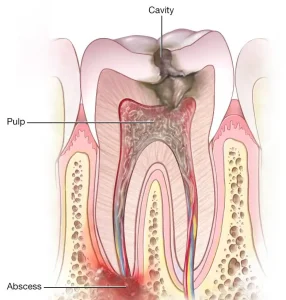
A tooth abscess is a pocket of pus caused by a bacterial infection in or around a tooth. The infection can occur in different parts of the tooth, including the root, the gums, or the surrounding bone. This condition usually develops when bacteria enter the tooth through untreated cavities, cracks, or gum disease.
A tooth abscess can cause severe pain and swelling and may spread to nearby tissues if not treated promptly. It is considered a dental emergency because the infection can worsen over time and potentially lead to serious health problems. Early treatment by a dental professional is essential to remove the infection and relieve symptoms.
Symptoms
Symptoms of a tooth abscess may appear suddenly and often become severe as the infection progresses.
Common symptoms include:
-
Severe, persistent toothache
-
Sensitivity to hot or cold foods and drinks
-
Pain when chewing or biting
-
Swelling of the face, cheek, or jaw
-
Red or swollen gums
-
A small pimple-like bump on the gums
-
Bad breath or unpleasant taste in the mouth
-
Fever
-
Swollen lymph nodes in the neck or jaw
In some cases, the abscess may rupture, causing a sudden release of foul tasting fluid and temporary pain relief.
Causes
A tooth abscess develops when bacteria infect the inner parts of the tooth or surrounding tissues. The infection usually occurs when bacteria enter through damaged tooth structures or inflamed gums.
Common causes include:
-
Untreated dental cavities
-
Cracked or broken teeth
-
Gum disease
-
Poor dental hygiene
-
Previous dental procedures that allow bacteria to enter
-
Injury to the tooth
Once bacteria reach the inner pulp of the tooth, the infection can spread to the root and surrounding bone.
Risk factors
Several factors may increase the risk of developing a tooth abscess:
-
Poor oral hygiene
-
High consumption of sugary foods and drinks
-
Untreated tooth decay
-
Dry mouth that reduces protective saliva
-
Gum disease
-
Smoking
-
Weakened immune system
Maintaining good dental care can significantly reduce the likelihood of infection.
Complications
If a tooth abscess is not treated, the infection may spread to nearby tissues or other parts of the body.
Possible complications include:
-
Spread of infection to the jawbone
-
Facial swelling and severe pain
-
Sinus infections
-
Difficulty swallowing or breathing
-
Spread of infection to the neck or brain in rare cases
-
Sepsis, a serious infection that spreads through the bloodstream
Prompt dental treatment is important to prevent these complications.
Prevention
Good oral hygiene and regular dental care are key to preventing tooth abscesses.
Helpful preventive measures include:
-
Brush teeth at least twice a day with fluoride toothpaste
-
Floss daily to remove food particles between teeth
-
Limit sugary foods and beverages
-
Visit a dentist regularly for checkups and cleanings
-
Treat cavities and dental problems early
-
Drink plenty of water, especially after meals
-
Use fluoride products when recommended
Maintaining healthy dental habits can help protect teeth from infections and reduce the risk of developing a tooth abscess.
Advertisement
